White butterbur
Petasites albus
Description
White butterbur (Petasites albus) is a perennial herbaceous plant belonging to the Asteraceae family. It is recognized in horticulture for its vigorous growth, large foliage, and early spring flowering period, which makes it a valuable species for shaded, moist garden environments.
The plant originates from the mountain ranges and damp woodland areas of Europe. It thrives in temperate climates and is naturally found in habitats such as riparian zones, wet meadows, and forest understories where soil moisture remains consistently high throughout the growing season.
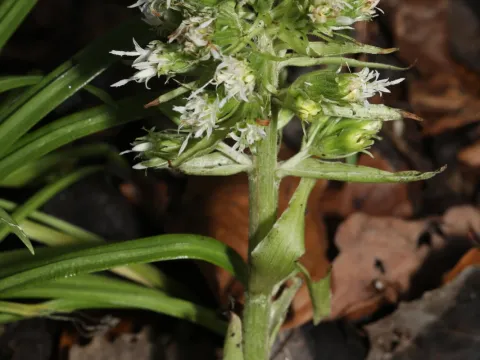
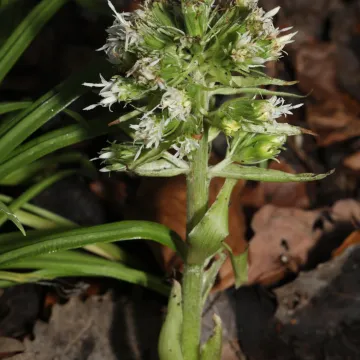
The botanical profile includes a robust, creeping rhizome system that allows for rapid expansion. The leaves are large, circular, and distinguished by a white, felt-like tomentum on the undersides. In early spring, before leaf emergence, the plant produces erect flowering stems featuring clusters of white to pale cream-colored inflorescences.
Cultivation requirements focus on providing high soil moisture and partial to full shade. While it is not particularly demanding regarding soil fertility, it flourishes in organic-rich, damp substrates. Agricultural management involves space control, as the aggressive rhizomatous nature of the plant requires preventative measures to avoid uncontrolled spread in smaller garden plots.
The primary economic and practical uses for white butterbur include medicinal applications in traditional herbal practices and landscape design for soil stabilization in moist, shady areas. Common health issues for the crop include fungal leaf spots and powdery mildew, often occurring in stagnant or poorly ventilated sites. Major pests include slugs and snails, which can cause significant defoliation to younger plants.
Photo gallery