Petasites spurius
Petasites spurius
Description
Petasites spurius, commonly known as a type of butterbur, is a perennial herbaceous plant belonging to the Asteraceae family. It is recognized for its unique ability to thrive in sandy soils, making it an essential species for ecological restoration and land stabilization projects.
The plant originates from the temperate regions of Eurasia. Its natural habitat includes coastal sand dunes and sandy riverbanks, where it plays a critical role in dune stabilization. Cultivation in agricultural settings is typically focused on soil protection rather than food production.
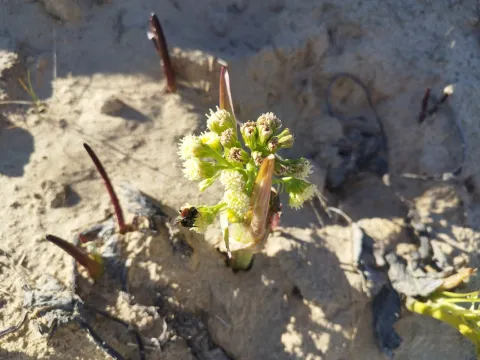
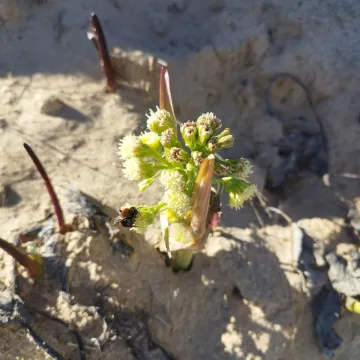
Botanically, this species is characterized by its early spring flowering, where inflorescences appear before the development of large, felt-textured leaves. The leaves are typically triangular-kidney shaped with a distinct white-tomentose underside, which aids in water retention during dry periods.
Agronomic requirements for Petasites spurius include well-drained, sandy substrates with sufficient seasonal moisture. While it is highly adaptive to low-fertility soils, it thrives when the soil structure allows for deep root penetration, which is vital for its primary function as a soil binder.
Its primary господарське (economic) application is in phytomelioration. It is extensively used to control soil erosion and stabilize shifting sands in coastal areas. In traditional herbal medicine, certain extracts from the plant have been explored for their anti-inflammatory properties, although professional handling is required.
- Extensive rhizome development
- High tolerance to saline conditions
- Excellent erosion control capacity
- Low maintenance requirements
- Winter-hardy perennial growth
Photo gallery