Childing pink
Petrorhagia prolifera
Description
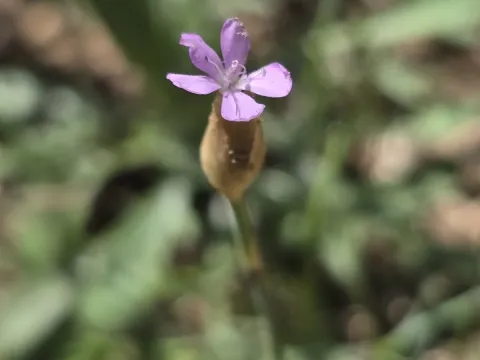
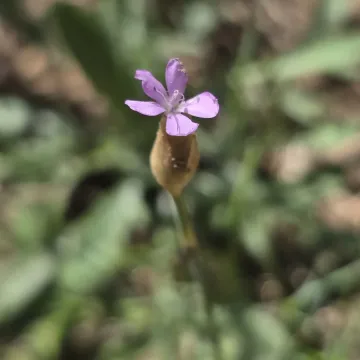
Petrorhagia prolifera, widely known as childing pink, is a distinctive annual plant belonging to the Caryophyllaceae family. It is recognized for its unique, head-like inflorescences enveloped by prominent, papery bracts, which protect the small pink petals nestled within.
The plant originates from the Mediterranean region and parts of Central Europe. It has established itself across various habitats, including dry grasslands, rocky slopes, and disturbed soils. Because of its hardy nature, it is often found in sites with poor soil quality where competition from more vigorous vegetation is limited.
Botanically, it features slender, erect stems that grow up to 50 cm in height. The foliage is narrow and grass-like, typical of the pink family. The flowering process is particularly interesting, as the plant produces small clusters of flowers that appear sequentially, contributing to its scientific name, which refers to the proliferation of its flower heads.
In terms of agricultural and horticultural requirements, the plant thrives in well-drained, sandy or calcareous soils and requires full sun exposure. It is highly drought-tolerant, making it an excellent choice for xeriscaping or naturalistic garden designs. Proper aeration and low-fertility conditions are essential for maintaining the plant’s compact form.
- Requires full solar exposure for optimal growth.
- Thrives in lean, well-drained soil types.
- Highly resistant to common drought conditions.
- Limited susceptibility to typical garden pests.
Regarding pest and disease management, the childing pink is generally robust. The most significant risks involve root rot caused by poor soil drainage or excessive irrigation. It is rarely targeted by major pests, though occasionally aphids may colonize the flower heads if the plant is stressed by prolonged periods of excessive humidity.
Photo gallery