Tunic flower
Petrorhagia saxifraga
Description
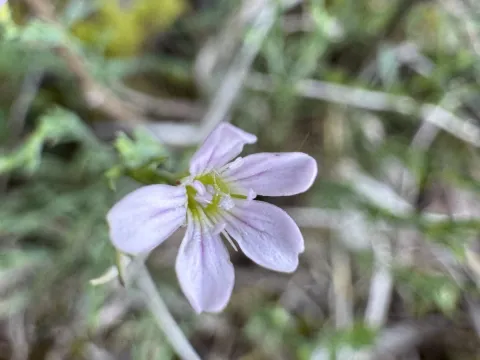
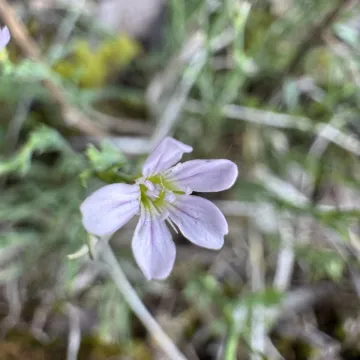
The tunic flower (Petrorhagia saxifraga) is a charming herbaceous perennial plant belonging to the Caryophyllaceae family. It is widely recognized for its delicate appearance, resembling miniature carnations, which creates a stunning visual effect when mass-planted in garden settings.
Native to Southern and Central Europe, as well as Western Asia, this plant has evolved to thrive in challenging environments. It is naturally found on dry, rocky slopes and calcareous soils, which has resulted in its exceptional resilience to nutrient-poor substrates and erratic moisture levels.
Botanically, the plant forms low-growing, compact mats of fine, grass-like foliage that reach a height of approximately 15 to 20 centimeters. The flowers, typically appearing in shades of pale pink or white with distinct darker veins, emerge on thin, wiry stems, giving the plant an airy, cloud-like appearance during its extended blooming season.
From an agronomic perspective, the tunic flower is relatively undemanding, though it requires specific conditions to perform well. The most critical requirement is excellent drainage, as the plant is highly susceptible to root rot in waterlogged soils. It thrives in full sun and prefers a neutral to slightly alkaline pH, making it ideal for xeriscaping.
In terms of usage, it is primarily employed in ornamental horticulture. It is a classic choice for rock gardens, gravel beds, and planting in the crevices of stone walls. Pests and diseases are generally not a significant concern for this species, provided that the soil is well-drained and the plants are given adequate airflow, preventing common fungal issues associated with dampness.
Photo gallery