Petrosimonia brachiata
Petrosimonia brachiata
Description
Petrosimonia brachiata is an annual herbaceous plant belonging to the Amaranthaceae family, specifically the subfamily Chenopodioideae. Recognized as a specialized halophyte, this plant has evolved to thrive in soils with high salt concentrations, making it a critical subject for agricultural studies in saline-affected regions.
The native range of this species covers the arid and semi-arid steppes of Eurasia. It is predominantly found in saline marshes, the shores of salt lakes, and depleted rangelands. Its presence is an indicator of highly mineralized soil conditions, where it often forms dense, vegetation-resilient patches.
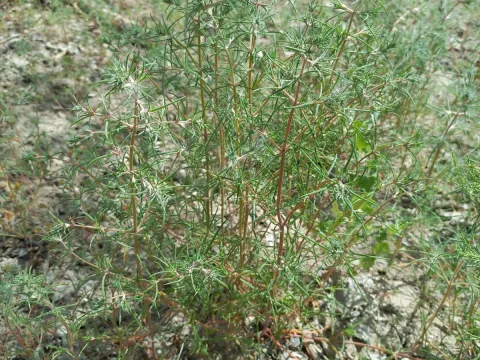
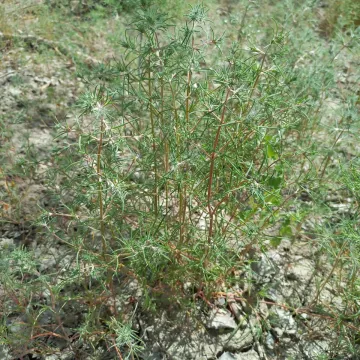
Botanically, the plant presents a branching stem, reaching heights typically between 15 to 40 centimeters. Its leaves are arranged oppositely along the stem, characterized by a succulent, linear-subulate shape. This structure is a physiological adaptation that prevents excessive water loss, allowing the plant to maintain metabolic functions in heat-stressed environments.
The agronomic requirements for Petrosimonia brachiata revolve around its tolerance for poor, salty soil. It does not demand high soil fertility or irrigation, which are typical for standard agricultural crops. Instead, it thrives in locations that would be toxic to most plants, utilizing the saline content for growth while providing vegetative cover to barren, salty areas.
- Superior salt tolerance
- Adaptability to arid conditions
- Forage utility for camels and sheep
- Soil stabilization in saline regions
Economically, this plant serves primarily as an essential source of forage for livestock in harsh, saline-heavy environments. Farmers utilize these rangelands to sustain sheep and camel herds where conventional grasses cannot grow. Disease and pest pressure are generally low, as the plant's high salt concentration acts as a natural defense mechanism.
Photo gallery