Peucephyllum schottii
Peucephyllum schottii
Description
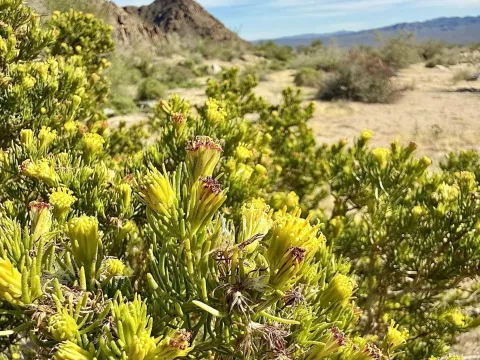
Peucephyllum schottii, commonly known as the desert pine or pygmy pine, is a unique shrub species within the Asteraceae family. Despite its common name suggesting a relationship with conifers, it is actually a flowering shrub that has evolved specialized adaptations to thrive in the harsh, arid environments of the Southwestern United States and Northwestern Mexico.
The plant is native to the Sonoran and Mojave Deserts, where it typically inhabits rocky slopes, dry washes, and desert canyons. Its range is defined by extreme heat, intense solar radiation, and limited annual rainfall, forces that have shaped its physiological traits, allowing it to survive where many other agricultural or ornamental species would fail.
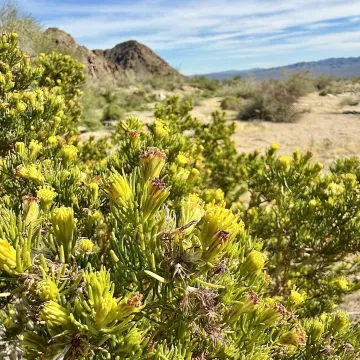
Botanically, it is a rounded, evergreen shrub reaching heights of up to 3 meters. The foliage consists of narrow, thread-like leaves that are heavily coated in resin, an adaptation that significantly reduces water loss through transpiration. During the blooming season, the shrub produces small, yellow, disk-shaped flower heads, typical of the sunflower family, which later develop into small, wind-dispersed seeds.
Agricultural and cultivation requirements for Peucephyllum schottii center on providing excellent drainage. In a landscape or nursery setting, the plant requires sandy, gravelly, or rocky soil with a neutral to alkaline pH. Irrigation should be kept to a minimum, as the plant is highly susceptible to root rot if the soil remains damp for extended periods. It is essentially self-sustaining, requiring no supplementary fertilization and minimal pruning.
In terms of practical application, this species is primarily valued in xeriscaping and sustainable landscape design for arid regions. It serves as an excellent stabilizer for loose, rocky soils and is highly resistant to both pests and common plant pathogens, likely due to its pungent, resinous compounds. While not a conventional crop, it remains a significant interest for ecological restoration projects in desertified environments.
- Exceptional drought tolerance.
- Resin-coated foliage for water retention.
- Resilience against common pests and insects.
- Low-maintenance landscaping potential.
- Ability to thrive in nutrient-poor desert soils.
Photo gallery