Silky phacelia
Phacelia sericea
Description
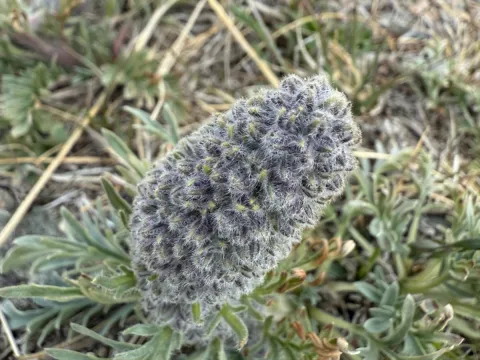
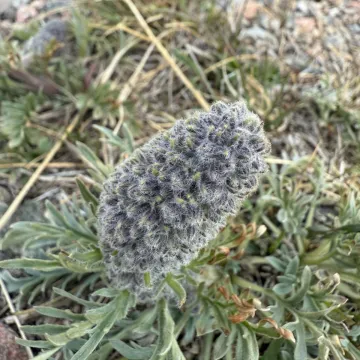
Silky phacelia (Phacelia sericea) is a herbaceous perennial plant belonging to the Boraginaceae family. It is widely recognized for its distinctive silvery foliage, which is covered with fine, silky hairs, giving the plant a unique metallic shimmer and high ornamental value.
The species is native to the mountainous regions of Western North America, typically found in alpine meadows and rocky slopes. Because of its origin, the plant has evolved to withstand extreme environmental stresses, such as high-altitude winds, intense cold, and nutrient-poor, rocky soil conditions.
Botanically, silky phacelia is a compact plant characterized by deeply divided, silver-green leaves and dense, spike-like inflorescences. The flowers are typically dark purple or blue, featuring prominent, long stamens that extend well beyond the petals, making them particularly attractive to bumblebees and other pollinators.
Cultivation requires careful site selection. The plant thrives in well-drained, porous soils, such as gravelly or sandy loams. It is intolerant of waterlogging, which can cause crown rot. In agricultural settings, it requires full sun to maintain its compact growth habit and vibrant flowering display, making it unsuitable for shaded or overly humid environments.
Economic and ecological applications of this species are diverse:
- Excellent source of nectar for local bee populations in alpine climates.
- Used in rock gardens and alpine landscaping for its unique silver color.
- Soil stabilization on mountain slopes due to its fibrous root structure.
- Research focus for breeding hardy ornamental varieties.
Regarding health and protection, silky phacelia is generally robust but can suffer from fungal infections if soil drainage is compromised. Pests such as aphids may occasionally attack the tender flowering stems during dry spells. Management involves maintaining appropriate soil moisture levels and ensuring optimal air circulation within the planting site to prevent the development of root diseases.
Photo gallery