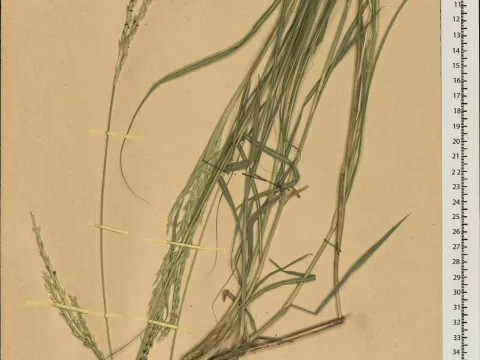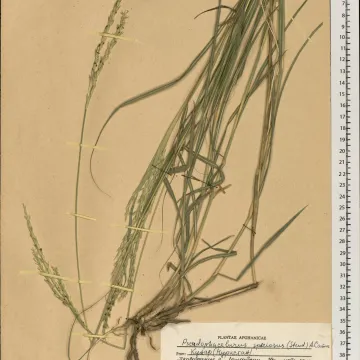
Phacelurus speciosus
Phacelurus speciosus
Description
Phacelurus speciosus is a perennial grass species belonging to the Poaceae family. This crop is recognized for its robust growth, significant biomass production, and adaptability to various environmental conditions, making it an interesting candidate for forage production and soil conservation programs.
Originating from East Asia, including regions of China and Japan, the plant thrives in temperate and subtropical climates. Its natural habitat consists of grasslands and mountainous slopes, where it has evolved to withstand diverse soil types and seasonal climate fluctuations, supporting its potential for wider agricultural adoption.
Botanically, this species is characterized by its stiff, erect stems and linear leaves. It possesses an extensive root system, which contributes to its resilience and soil-binding capabilities. The inflorescence is a dense spike-like raceme, which facilitates efficient seed production, allowing for natural reseeding and effective propagation in cultivated stands.
Cultivation requirements for Phacelurus speciosus include well-drained, fertile soils with a neutral to slightly acidic pH. While it is relatively drought-tolerant once established, optimal productivity is achieved with consistent moisture during the peak growing season. Agronomic management involves strategic nitrogen fertilization and controlled harvesting intervals to maximize forage quality and stand longevity.
- High nutritive value for livestock.
- Strong root system for erosion control.
- Excellent regrowth after mowing or grazing.
- Natural resistance to common grass pests and diseases.
The primary economic use of this species is in livestock feed, specifically for hay and pasture utilization. Beyond agriculture, it serves a secondary purpose in ecological restoration, where its growth habit helps prevent erosion on steep terrains. The crop's low susceptibility to common diseases ensures consistent yields, contributing to its value as a reliable component in sustainable agricultural systems.
Photo gallery