Phaeoceros carolinianus
Phaeoceros carolinianus
Description
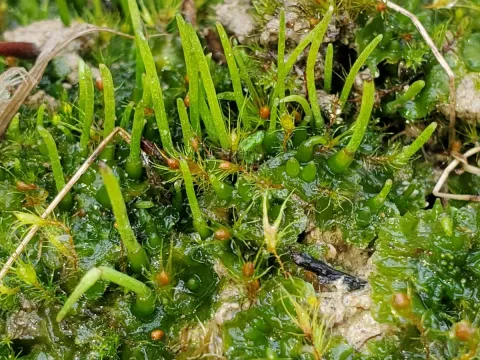
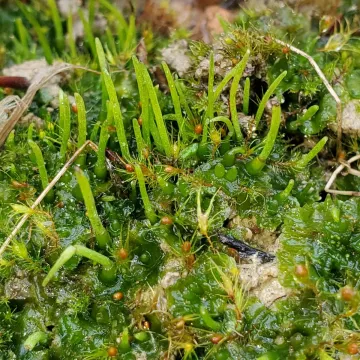
Phaeoceros carolinianus, commonly known as the Carolina hornwort, is a significant species within the Anthocerotophyta division. These organisms are recognized for their distinct, horn-like sporophytes and a thalloid body that structurally differs from both true mosses and liverworts.
The species has a broad, cosmopolitan distribution, thriving in various moist environments worldwide. It is frequently observed in open habitats such as agricultural fields, ditch banks, and areas with disturbed, nutrient-rich, but often unstable soil conditions where it can quickly establish colonization.
Botanically, this hornwort is defined by its deep green rosette-shaped thallus. A critical biological feature of Phaeoceros carolinianus is the presence of a single large chloroplast within each cell, containing a prominent pyrenoid. This cellular anatomy is a key characteristic used for identification and differentiates it from more complex plant groups.
In terms of environmental requirements, the plant necessitates consistent moisture and moderate to high light exposure. While not a commercial agricultural crop, it serves an important ecological role by maintaining nitrogen-fixing symbioses with Nostoc cyanobacteria. This association allows the plant to thrive in nitrogen-limited soils, contributing to soil fertility.
The species generally does not face traditional agricultural pests or diseases. Its resilience is attributed to its simple yet robust survival strategies. Research continues to investigate its use as a bio-indicator for soil health and its potential in ecological restoration projects aimed at rehabilitating disturbed landscapes.
Photo gallery