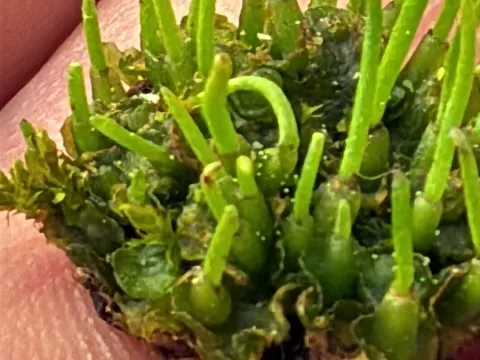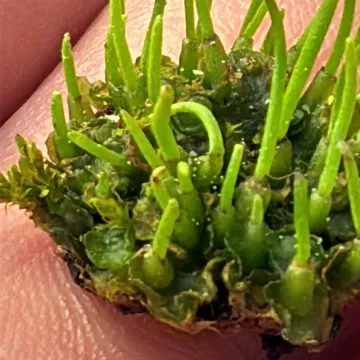

Smooth hornwort
Phaeoceros laevis
Description
Smooth hornwort (Phaeoceros laevis) is a species of hornwort belonging to the division Anthocerotophyta. Although not a conventional agricultural crop, it is a significant organism in soil biology and an indicator of specific microclimatic conditions within agro-ecosystems. It is recognized for its unique evolutionary position between simple mosses and higher vascular plants.
The plant is widely distributed across the globe, inhabiting diverse environments ranging from temperate regions to tropical zones. It is commonly found on damp, exposed soils, along irrigation ditches, and in agricultural landscapes where the surface has been disturbed. It thrives in environments where sunlight is sufficient and competition from grasses or other tall vegetation is minimal.
Botanically, Phaeoceros laevis consists of a flat, lobed thallus that forms rosettes. Its most distinctive feature is the upright, horn-shaped sporophyte that emerges from the thallus. Inside the cells, the presence of a single large chloroplast with a pyrenoid distinguishes it from other bryophyte groups. It also hosts symbiotic cyanobacteria (Nostoc) within its tissue, which perform nitrogen fixation.
Requirements for the species include consistently high soil moisture and a stable pH level. In an agricultural setting, this plant is not cultivated but rather managed; its presence often indicates soil compaction or poor drainage. Proper field maintenance, such as tilling or improving subterranean water management, directly influences the density of hornwort colonies present in a given area.
The primary use of this plant is in ecological research and environmental monitoring. Because it reacts quickly to changes in soil chemistry and moisture, it serves as a valuable tool for assessing soil degradation or reclamation success. There are no major pests or diseases that affect this species, as its rapid growth cycle and low biomass make it resilient to typical agricultural stressors.
Photo gallery