Canary grass
Phalaris coerulescens
Description
Canary grass (botanical name: Phalaris coerulescens) is a perennial grass belonging to the Poaceae family. It is recognized in agronomy as a valuable forage species that provides reliable year-round production in regions with Mediterranean-style climates, characterized by wet winters and dry summers.
The origin of Phalaris coerulescens is centered in the Mediterranean region. Currently, it is successfully cultivated in various parts of the world, including Australia and South America, where farmers seek resilient species to improve the productivity of pastures and enhance livestock nutrition during off-peak growth seasons.
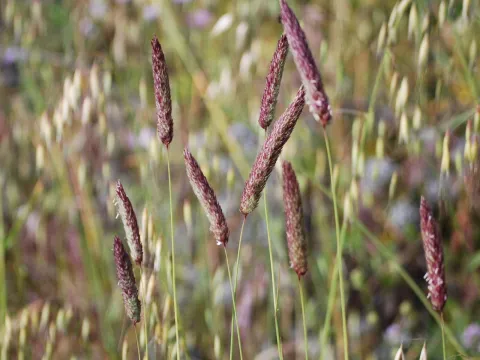
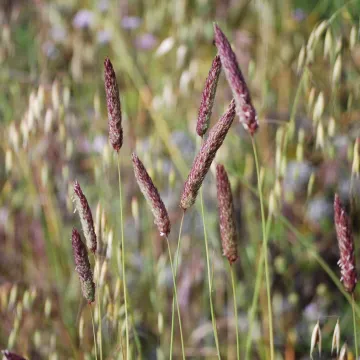
Botanically, this grass is distinguished by its dense, tufted habit and distinctive blue-green foliage. It grows to a height of approximately one meter, featuring narrow leaf blades and a tight, silvery-gray spikelike panicle. The plant is known for its strong, fibrous root system which aids in soil stabilization.
Regarding climate and soil requirements, this species thrives in fertile, loamy soils with good drainage. It is notably tolerant of moderate drought and waterlogging compared to other temperate grasses. Cultivation requires careful seedbed preparation, as seedling vigor can be slow, but once established, the crop is exceptionally persistent and competitive.
The primary agricultural uses of this species include:
- Grazing systems for cattle and sheep, as it provides high-quality forage.
- Hay production when harvested at the vegetative stage before flowering.
- Soil conservation efforts on steep slopes prone to erosion.
- Interseeding with legumes to increase overall pasture nutritional density.
In terms of health, the plant is relatively hardy, though it may be susceptible to fungal diseases such as rust or smut under high humidity conditions. Pest management focuses on early-stage protection against insect larvae that target the stems. Providing balanced mineral nutrition and avoiding overgrazing are the most effective management strategies to keep the stand productive for many years.
Photo gallery