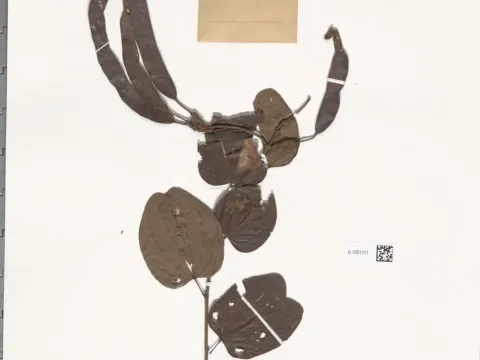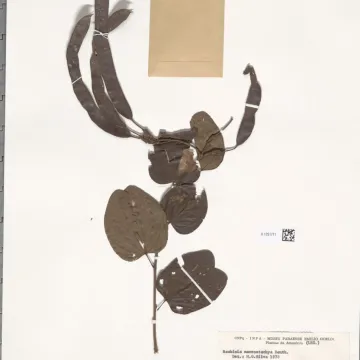

Phanera macrostachya
Phanera macrostachya
Description
Phanera macrostachya is a woody perennial vine belonging to the Fabaceae family. As a member of the Bauhinieae tribe, it is characterized by its distinctive bi-lobed foliage, often compared to a camel's hoof, and its climbing growth habit, which allows it to thrive in dense tropical environments.
The species is native to the tropical regions of Central and South America. Its natural habitat is primarily rainforests and humid forest edges, where it utilizes its climbing structures to reach sunlight. Due to its origin, the plant is well-adapted to high-humidity environments and warm climates throughout the year.
Botanically, the plant features large, showy inflorescences that attract various pollinators. The fruits are typical legume pods, which contain seeds that are biologically significant for the plant's reproduction and potential nutritive value. The stem structure is highly flexible but woody enough to support long-term growth.
Regarding cultivation requirements, Phanera macrostachya demands tropical temperatures and cannot survive frost. The soil should be fertile, well-draining, and rich in organic matter to mimic its natural forest floor environment. Providing strong trellis systems is essential for commercial or ornamental cultivation to ensure proper airflow and light exposure.
Typical agricultural applications include reforestation projects, ornamental landscape design, and research into secondary metabolites for pharmaceutical use. Potential threats to this crop include fungal infections in humid conditions, such as root rot, and common tropical pests like aphids or spider mites which target tender foliage.
Photo gallery