Caucasian mock-orange
Philadelphus caucasicus
Description
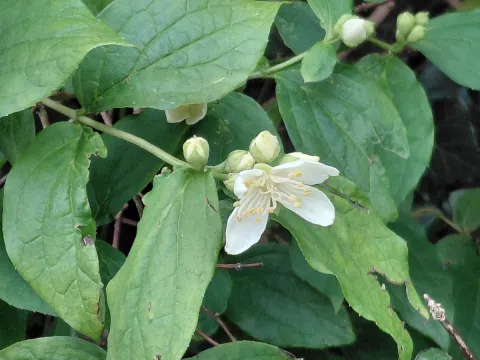
The Caucasian mock-orange (Philadelphus caucasicus) is a deciduous shrub species belonging to the Hydrangeaceae family. Known for its intense fragrance and profuse white blossoms, this plant is a staple in ornamental horticulture. It typically develops into a multi-stemmed, upright bush, reaching considerable height and width in favorable ecological conditions.
Native to the mountainous regions of the Caucasus, this shrub is naturally adapted to cooler climates and varying light intensities found in forest ecotones. Its ability to tolerate a range of environmental stressors makes it a reliable choice for temperate zone landscaping, where it provides structural interest and seasonal scent.
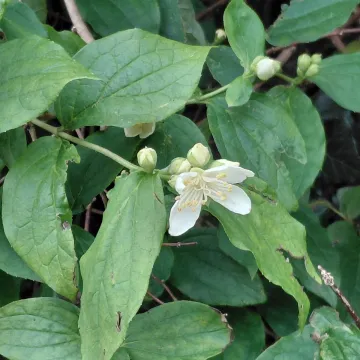
Botanically, Philadelphus caucasicus is characterized by ovate, opposite leaves and white, four-petaled flowers that bloom in clusters. The blooming period usually occurs in early summer, lasting for several weeks. The shrub's resilience is supported by a robust root system, allowing it to compete effectively for nutrients in typical forest-edge soils.
Cultivation requires well-drained, fertile soil with a neutral pH level. While it prefers full sun to light shade, it is important to provide protection from drying winds, which can damage the delicate flowers. Pruning is a critical aspect of maintenance; removing about a third of the oldest branches annually promotes vigorous new growth and ensures maximum flower production for the following year.
The primary use of this species is landscape ornamentation, serving as an effective hedge, screen, or standalone feature plant. While generally hardy, the plant can be susceptible to aphids and mites, which can be managed with standard horticultural soaps or selective insecticides if an infestation is detected.
- Annual application of balanced fertilizer in early spring.
- Regular weeding to reduce competition for nutrients.
- Monitoring for leaf spot diseases during humid periods.
- Deep watering during dry summer spells to prevent wilting.
Photo gallery