Rough-leaf mock-orange
Philadelphus hirsutus
Description
The rough-leaf mock-orange, known botanically as Philadelphus hirsutus, is an ornamental deciduous shrub belonging to the Hydrangeaceae family. It is distinct from other species in the genus due to the soft, hirsute hairs covering its leaves and stems, which give the plant a textured appearance. It is highly valued in horticulture for its graceful form and seasonal floral display.
Native to the southeastern United States, this species has evolved in mountainous and woodland habitats. Its natural resilience has made it a candidate for various gardening applications across temperate climate zones. It thrives in regions where the transition between seasons is distinct, adapting well to the conditions found in typical garden soil and mixed landscape environments.
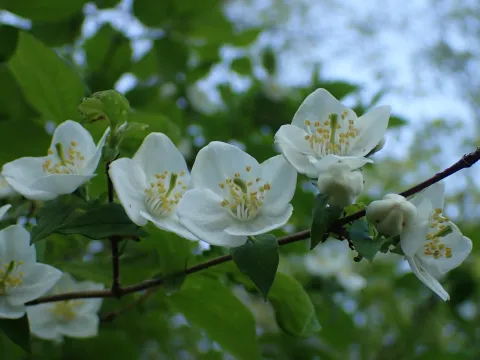
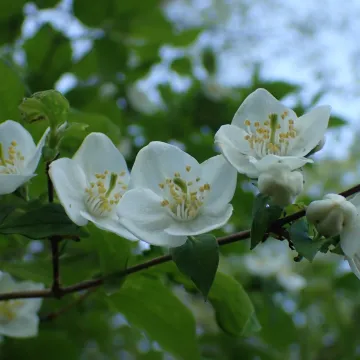
Botanically, the plant features a spreading habit, reaching heights of up to three meters under optimal conditions. The foliage is simple and opposite, covered in fine trichomes. During the late spring and early summer, the shrub produces clusters of delicate, four-petaled white flowers. Unlike some fragrant varieties, this specific species is often noted for having a very mild or absent floral scent.
Cultivation requirements for Philadelphus hirsutus include a location with full sun to partial shade and moist, well-draining soil. It is relatively adaptable, though it prefers slightly acidic to neutral soil pH levels. Regular maintenance is essential for vigor and includes pruning immediately after flowering to remove old wood and encourage new growth, which ensures better flower production for the following year.
In terms of agricultural and landscape usage, it serves as a robust background shrub or a component in shrub borders. While generally hardy, the plant can be susceptible to common pests such as aphids or spider mites during hot, dry spells. Disease management usually focuses on preventing leaf spot and powdery mildew through proper spacing to ensure adequate air circulation around the foliage.
Photo gallery