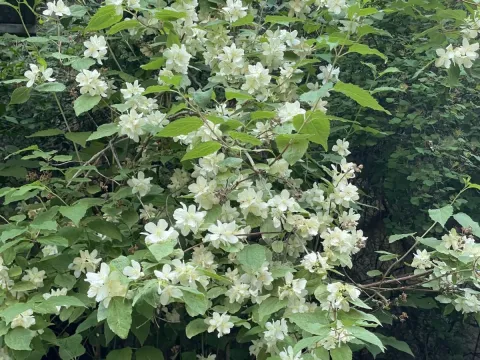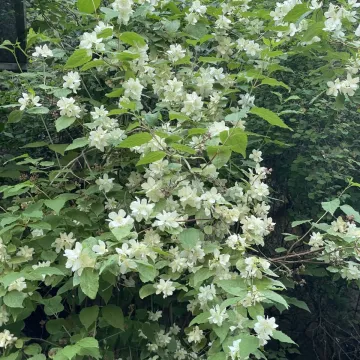

Peking mock orange
Philadelphus pekinensis
Description
The Peking mock orange (Philadelphus pekinensis) is a deciduous flowering shrub belonging to the Hydrangeaceae family. Known for its graceful growth habit and fragrant white blooms, it serves as a staple in ornamental horticulture, particularly valued for its reliability in garden landscapes.
This species is native to East Asia, primarily originating from northern parts of China and Mongolia. It has adapted to a range of temperate environments, allowing it to thrive in various climates across the globe where soil and moisture conditions are managed appropriately for its specific needs.
Botanically, the plant is characterized by its spreading, woody branches that can reach heights of up to 3 meters. The leaves are typically lanceolate, and the flowers emerge in late spring or early summer, arranged in clusters. Its overall structure allows it to function effectively as a standalone specimen or as part of a dense, flowering hedge.
Cultivation requires a well-drained, fertile soil and a site that receives full sun to partial shade. Standard agricultural practices involve consistent watering during dry spells and annual pruning to remove dead or unproductive wood. Maintaining the plant's health ensures a more vigorous floral display each subsequent year.
The primary use of Philadelphus pekinensis is decorative garden design. Growers should remain vigilant against common pests such as aphids and spider mites, as well as fungal issues like powdery mildew in overly humid conditions. Regular monitoring and appropriate treatment keep the plants healthy throughout the growing season.
Photo gallery