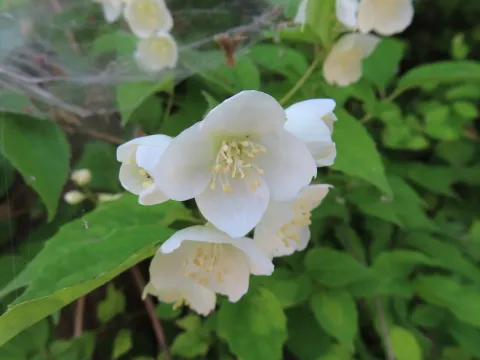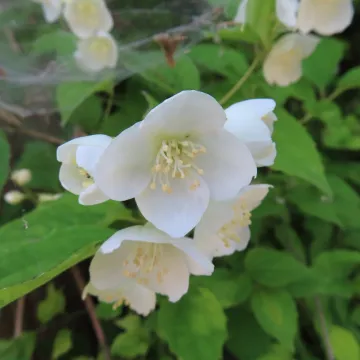
Satsuma mock orange
Philadelphus satsumanus
Description
Satsuma mock orange (Philadelphus satsumanus) is a deciduous flowering shrub belonging to the Hydrangeaceae family. It is highly valued in horticulture for its aesthetic appeal, particularly its prolific production of white, fragrant flowers that enhance garden landscapes during the late spring and early summer seasons.
The species originates from East Asia, specifically Japan. It has adapted to various temperate climates, where it thrives in locations that provide a balance of sunlight and protection from harsh environmental stressors. Its natural habitat suggests a preference for regions with consistent moisture levels.
Botanically, the plant is characterized by its woody, erect growth habit and opposite, ovate leaves. The flowers are generally arranged in racemes and exhibit the classic scent associated with the genus. Its structural integrity makes it an excellent candidate for formal and informal garden designs, where it can provide seasonal structure.
Agricultural requirements for Philadelphus satsumanus include well-drained, fertile soil with a neutral to slightly acidic pH. While it is relatively hardy, regular maintenance is essential, including deep watering during dry spells and consistent fertilization in the early spring. Pruning is critical; it should be performed immediately after flowering to promote vigorous growth for the following season.
- Requires partial to full sun exposure.
- Prefers moisture-retentive, organic-rich soil.
- Benefits from annual pruning of old wood.
- Can be propagated via softwood cuttings.
The primary use of this culture is ornamental, serving as focal points or foundational elements in landscaping. While robust, the plant can be susceptible to typical garden pests like aphids or spider mites. Integrated pest management, including regular monitoring and the use of targeted treatments, is advised to maintain the health and vigor of the shrubs throughout the growing year.
Photo gallery