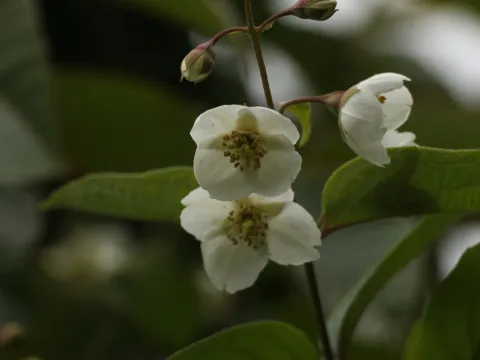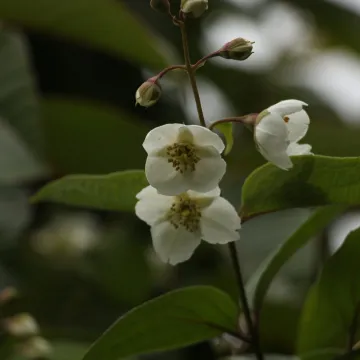

Philadelphus tomentosus
Philadelphus tomentosus
Description
Philadelphus tomentosus is a perennial deciduous shrub belonging to the Hydrangeaceae family. Known in horticulture as a species of mock orange, it is highly valued for its fragrant white flowers and elegant growth habit, making it a staple in temperate ornamental gardens.
The plant originates from the mountainous regions of the Himalayas and other parts of Asia. In its natural habitat, it thrives in woodland edges and open slopes. Its introduction into cultivation has allowed it to adapt to a variety of garden settings, where it is appreciated for its structural beauty throughout the growing season.
Botanically, this species is distinguished by the dense, tomentose (wooly) pubescence on the undersides of its leaves, which is a key diagnostic feature. The shrub typically reaches a height of 2 to 3 meters, producing upright branches that become covered in clusters of white, highly aromatic flowers during the early summer season.
Cultivation requirements for this species include well-drained, fertile soil and a site that receives plenty of sunlight or light dappled shade. It is relatively drought-tolerant once established, but regular watering is recommended during the initial growth years. Pruning should be carried out immediately after flowering to remove old wood and encourage the development of new, vigorous stems.
The primary use for this shrub is in landscape design, where it serves as an excellent candidate for mixed borders and informal hedging.
- Common pests include spider mites and aphids.
- Susceptibility to powdery mildew is possible in stagnant air conditions.
- Regular air circulation and good sanitation help minimize disease risk.
Photo gallery