Philotheca buxifolia
Philotheca buxifolia (Sm.) Paul G. Wilson
Description
Philotheca buxifolia is a resilient evergreen shrub belonging to the Rutaceae family, which is the same botanical family that includes citrus trees. This plant is recognized for its aromatic foliage, a common feature in many species within the Rutaceae group, produced by secretory glands on the leaves.
Native to Australia, specifically found in the coastal regions of New South Wales, this shrub naturally thrives in sandy, well-draining soils. Its evolutionary background has prepared it for the specific climatic conditions of its home range, requiring stable temperatures and avoiding waterlogged environments.
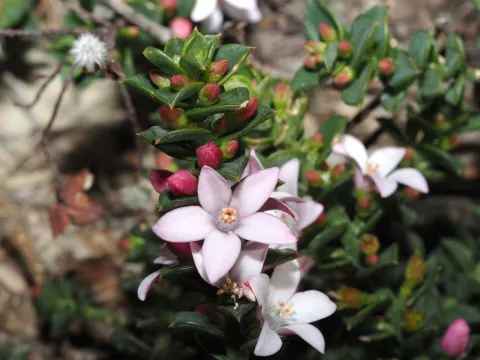
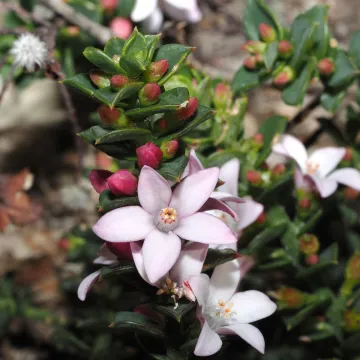
Botanically, it is characterized by its small, box-like, leathery leaves and delicate star-shaped flowers that appear in shades of white or light pink. The plant maintains a compact habit, making it an excellent candidate for formal garden arrangements, where its texture and fragrance can be fully appreciated.
Agronomic requirements emphasize the necessity of free-draining soil and a sunny or partially shaded location. In a cultivated setting, it is crucial to avoid overwatering to prevent root rot, as the species is highly sensitive to excessive moisture. Fertilizing should be done with care, ensuring the use of phosphorus-sensitive plant food.
The primary use of this species is ornamental landscaping, where it serves as an elegant addition to Mediterranean-style gardens. Typical challenges include monitoring for pests such as scale insects and mites, as well as managing the garden environment to prevent fungal pathogens that flourish in stagnant, humid conditions.
Photo gallery