
Philoxerus wrightii
Philoxerus wrightii
Description
Philoxerus wrightii is a perennial herbaceous plant belonging to the Amaranthaceae family. Known for its remarkable resilience, this species has evolved to thrive in some of the most challenging environments on earth, specifically in coastal regions where high salinity is a constant factor.
Its natural habitat encompasses tropical and subtropical maritime areas, where it frequently dominates dune and beach environments. This geographic distribution highlights its evolutionary adaptation to nutrient-poor soils and high-intensity saline exposure, setting it apart from standard field crops.
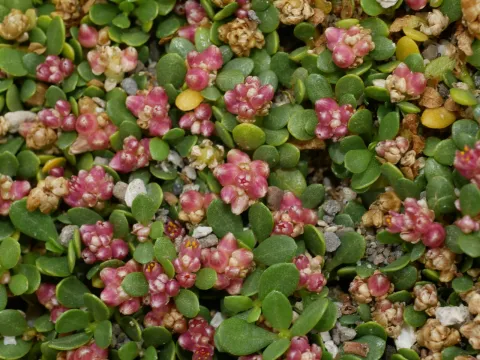
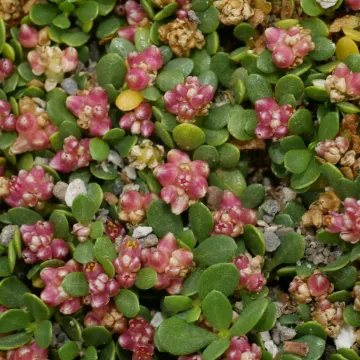
Botanically, the plant is characterized by succulent leaves and stems, which serve as water-storage organs. This anatomical structure allows it to maintain metabolic functions during periods of physiological drought, which is typical for saline-affected coastal soils.
Agronomic requirements emphasize the need for well-draining, sandy soils and abundant solar radiation. While the plant is exceptionally tolerant to salinity, it requires warm temperatures for optimal growth and is highly sensitive to frost, which limits its commercial cultivation to specific climatic zones.
In terms of agricultural and ecological utility, Philoxerus wrightii is primarily valued for its role in phytoremediation and soil stabilization. Its ability to hold sandy substrates in place makes it a critical tool in coastal erosion control. Furthermore, research is ongoing regarding its potential as a genetic model for developing salt-tolerant agricultural varieties.
- Exceptional salt tolerance (halophytic nature)
- Succulent morphology for moisture retention
- Excellent soil-binding properties for erosion control
- Adaptability to nutrient-deficient environments
- Propagation success in sandy substrates
Photo gallery