Cretan phlomis
Phlomis cretica
Description
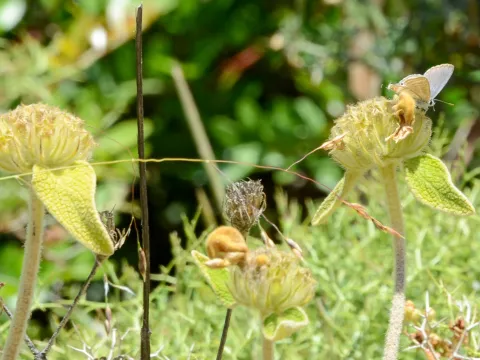
Cretan phlomis (Phlomis cretica) is an evergreen perennial shrub belonging to the Lamiaceae family. Renowned for its striking, woolly, silver-gray foliage, it is a highly valued ornamental plant in xeriscaping and Mediterranean-style garden designs.
The plant is native to the island of Crete and other parts of the Mediterranean basin. It has evolved to thrive in harsh, sun-drenched environments, commonly found on rocky limestone slopes and dry, gravelly terrain where water retention is low and exposure to elements is high.
Botanically, Phlomis cretica is characterized by its thick, felted leaves that provide protection against intense heat and dehydration. In late spring and early summer, it produces clusters of vibrant yellow flowers arranged in whorls around sturdy, upright stems, which add significant aesthetic value to the garden.
Regarding cultivation, the species demands excellent drainage and full sun exposure. It is highly drought-tolerant once established and does not require rich soil; in fact, poor, gritty, or alkaline soils are preferable. It is essential to avoid waterlogged conditions, as the root system is highly susceptible to decay in stagnant moisture.
The main use of this plant is decorative, serving as a focal point in borders, gravel beds, or rock gardens. It is generally resistant to most pests and diseases. However, in overly humid climates or poorly drained soils, gardeners should monitor for signs of powdery mildew or root rot, which are the most common issues affecting its health and development.
Photo gallery