Woolly Jerusalem sage
Phlomis crinita
Description
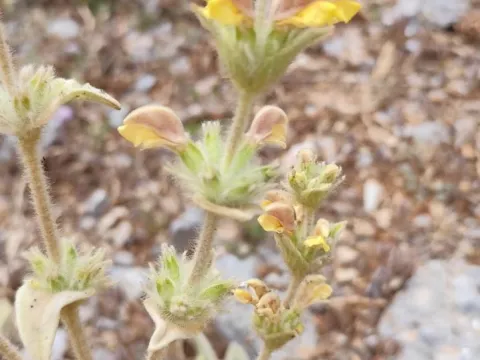
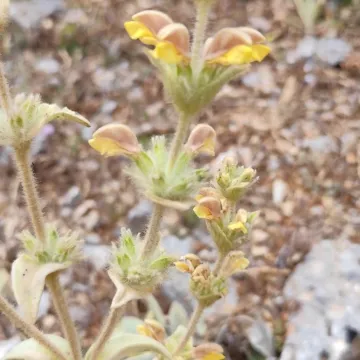
Woolly Jerusalem sage (Phlomis crinita) is a robust perennial herb belonging to the Lamiaceae family. This plant is increasingly recognized in sustainable agriculture and landscape design for its exceptional drought tolerance, structural beauty, and potential medicinal applications characteristic of the genus.
Originating from the Mediterranean basin and adjacent regions, Phlomis crinita has evolved to thrive in arid and semi-arid climates. Its native range consists of rocky outcrops and dry slopes, where it has developed specialized mechanisms to conserve water and survive extreme temperature fluctuations throughout the year.
Botanically, the plant is distinguished by its dense, fine hairs covering both stems and leaves, which serve as a natural defense against excessive transpiration. The inflorescences consist of whorls of tubular flowers, which are highly attractive to pollinators, particularly bees, making it a valuable plant for ecological management in agricultural landscapes.
Successful cultivation requires well-draining soil and a position in full sun. Agronomically, the crop is low-maintenance, as it does not require supplemental irrigation once established. Heavy, water-retentive soils must be amended with grit or gravel to prevent root rot, which is the primary cause of plant failure under improper cultivation conditions.
Economically, Phlomis crinita is utilized in xeriscaping, the production of botanical extracts, and as an ornamental flowering plant. Disease pressure is generally low, provided the site is well-drained. The main pests include spider mites during prolonged heatwaves, and common fungal pathogens like root rot or powdery mildew, which appear only under poor environmental management.
Photo gallery