Woolly Jerusalem sage
Phlomis lanata
Description
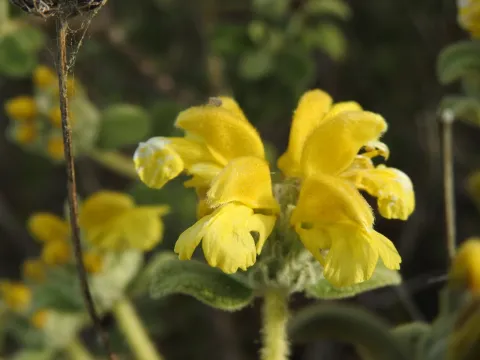
Woolly Jerusalem sage (Phlomis lanata) is a perennial subshrub belonging to the Lamiaceae (mint) family. This plant is highly prized for its unique architectural appearance, characterized by thick, woolly hairs on the leaves and stems that create a beautiful silvery-grey aesthetic throughout the growing season.
The native habitat of this species is centered in the Eastern Mediterranean, particularly in Greece and the Aegean Islands. It typically grows in rocky crevices, dry slopes, and open Mediterranean scrublands. Its evolutionary history has made it exceptionally well-suited for hot, arid climates with poor, rocky soil conditions.
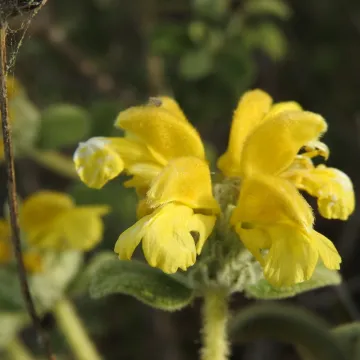
Botanically, the plant presents with egg-shaped, wrinkled leaves arranged in opposite pairs. The flowers are typically yellow and appear in tiered whorls along the upper stems during late spring and early summer. The plant’s structure is woody at the base, allowing it to maintain its form throughout the winter months in milder climates.
For successful cultivation, Phlomis lanata requires full sun and impeccable soil drainage. It thrives in lean, gravelly, or chalky substrates. High humidity and soggy soil are the primary enemies of this species, as they quickly lead to root decay. Gardeners should avoid heavy irrigation and ensure that the soil remains relatively dry, especially during the dormant season.
In terms of agricultural and horticultural use, this plant is a staple for xeric (drought-tolerant) gardens and rockeries. Its silvery foliage provides excellent contrast to green-leaved plants. Beyond its aesthetic value, it serves as a reliable pollinator plant, attracting diverse bee species. While generally robust, it is essential to monitor for fungal infections caused by excessive moisture or poor air circulation.
- Exceptional drought tolerance once established in the landscape.
- Minimal fertilization requirements; prefers poor or infertile soil.
- Annual pruning after flowering to maintain a compact, tidy form.
- High resistance to common pests due to its hairy, protective coating.
- Cold hardiness is generally limited to Mediterranean-like conditions.
Photo gallery