Russell's sage
Phlomis russeliana
Description
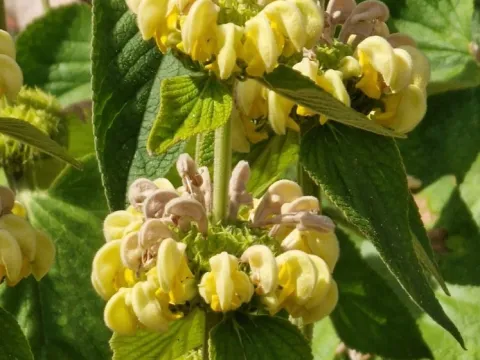
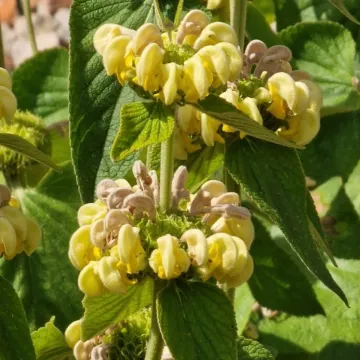
Russell's sage (Phlomis russeliana) is a distinctive herbaceous perennial plant belonging to the Lamiaceae family. It is highly valued in horticulture for its architectural foliage, velvety texture, and striking whorls of yellow, hooded flowers that provide long-lasting visual interest.
The plant originates from the regions of Turkey and the Middle East. Adapted to rocky environments and open woodland edges, it has evolved to become a highly resilient species capable of thriving in varied garden conditions, from full sun to partial shade, making it a reliable choice for professional landscapers.
Botanically, it forms a vigorous mound of large, heart-shaped, sage-green leaves covered in soft hairs. The flower spikes can reach up to one meter in height, carrying tiers of bright flowers that appear in early summer. Even after the flowers fade, the seed heads remain attractive, often lasting through the winter.
Cultivation requires well-drained soil; while it is tolerant of many soil types, it performs best in loam or sandy soils that do not stay waterlogged in winter. It is exceptionally drought-tolerant once established. Regular maintenance is limited to trimming back old foliage in late winter or early spring.
- Excellent choice for low-maintenance garden designs.
- Highly pest and disease resistant under correct conditions.
- Attractive to pollinators, especially bumblebees.
Its primary use is in landscaping as a robust filler or architectural specimen. Russell's sage is perfectly suited for borders, prairie-style plantings, and erosion control on slopes. Its structural qualities ensure that the garden remains interesting long after the peak flowering season has concluded.
Photo gallery