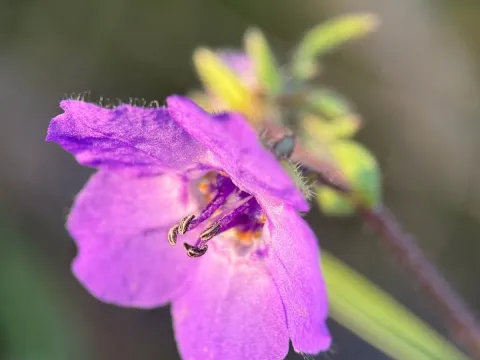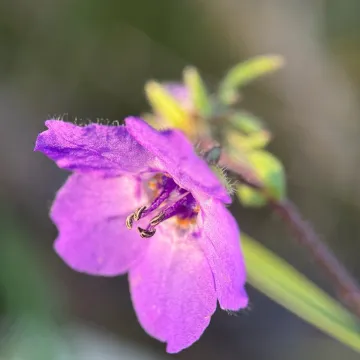
Blue fiesta flower
Pholistoma auritum (Lindl.) Lilja
Description
The Pholistoma auritum, commonly known as the Blue fiesta flower, is an annual herb belonging to the Boraginaceae family. It is a distinctive plant recognized for its sprawling growth habit and unique morphology, often utilized in native plant gardening and landscape restoration projects.
The plant is native to the western regions of North America, particularly in California. It thrives in shaded or semi-shaded environments, such as woodlands and protected canyons. Its cultivation area typically spans regions with a Mediterranean-type climate, characterized by mild, wet winters and warm, dry springs, which align with the plant's natural growth cycle.
Botanically, Pholistoma auritum is characterized by its succulent, climbing stems and large, lobed, eared leaves. The flowers are typically lavender to sky-blue in color, providing significant nectar for local pollinators. The plant's ability to cover large areas quickly makes it a species of interest for suppressing weed competition in controlled environments.
Agricultural requirements include well-drained, nutrient-rich soils with sufficient organic matter. While it prefers semi-shade, it can tolerate dappled light conditions. Irrigation should be managed carefully to avoid waterlogging, which the plant is highly susceptible to. Consistent soil moisture is necessary during the germination and early growth phases to ensure robust development.
Host use is primarily ecological, serving as a ground cover and a resource for beneficial insects. Common pests include aphids, which often target the tender new growth during spring. Pathogens such as powdery mildew can affect the foliage if the air circulation is inadequate, requiring proper spacing between plants as a fundamental agrotechnical measure.
Photo gallery