Pannonian sicklegrass
Pholiurus pannonicus
Description
Pannonian sicklegrass (Pholiurus pannonicus) is an annual grass species belonging to the family Poaceae. In agricultural terms, it is recognized as a specialized plant that thrives in saline environments, making it a valuable subject for agronomic research regarding the utilization of marginal, salt-affected landscapes.
The native distribution area of this plant spans across the steppes of Eurasia, particularly in regions characterized by salt-rich, alkaline soils. It has evolved to survive in arid and semi-arid climates, where its ability to complete its life cycle during short wet periods provides a distinct ecological advantage over more demanding crop varieties.
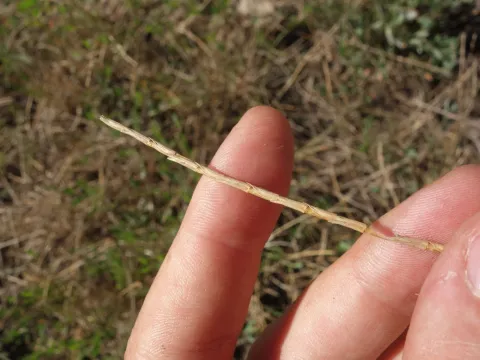
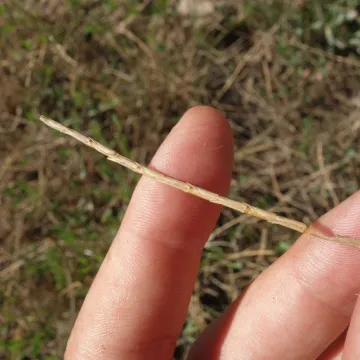
Botanically, the plant is characterized by a slender, erect stem and narrow leaves that are highly adapted to moisture conservation. The inflorescence is a distinct, stiff, cylindrical spike that is characteristic of the genus Pholiurus. These physical traits allow the plant to withstand the harsh conditions of its typical desert-like or salt-marsh habitats.
Agronomic requirements are centered on the plant's high tolerance to salinity. Unlike traditional forage crops, it does not require fertile, well-drained soils; instead, it performs best in soils where soluble salts limit the growth of other competitive plant species. Management practices should focus on maintaining natural soil hydration during the germination phase.
The primary agricultural and economic uses include:
- Rehabilitation of degraded saline pastures.
- Biological reclamation of salt-affected lands.
- Providing forage in arid regions where standard grasses fail to grow.
Disease and pest issues for Pholiurus pannonicus are relatively minimal due to its specific environmental adaptation. While it may be subject to occasional fungal infections typical of grass species in high-humidity periods, its reliance on specialized ecological niches means it is largely unaffected by common crop pests found in intensive agricultural systems.
Photo gallery