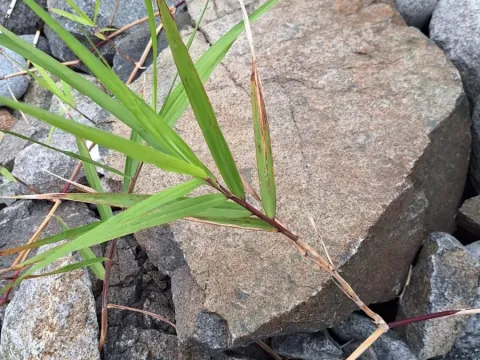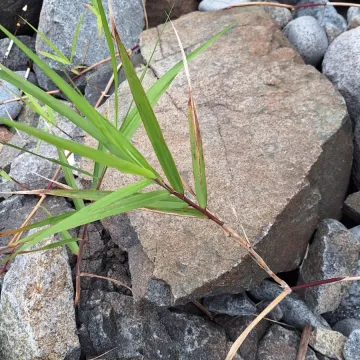
Japanese reed
Phragmites japonicus
Description
Japanese reed (Latin Phragmites japonicus) is a perennial herbaceous plant belonging to the Poaceae (grass) family. Unlike the common reed, this species is less invasive and is highly valued for its elegant, variegated foliage, making it a preferred choice for ornamental water features and landscape gardening.
The species is native to East Asia, including Japan, Korea, and parts of the Russian Far East. It typically thrives in wet environments such as riverbanks, marshes, and damp meadows. Due to its evolutionary adaptation to wetland ecosystems, the plant is well-suited for temperate climates and can withstand periods of temporary saturation or shallow standing water.
Botanically, Japanese reed grows to a height of 60–120 cm, featuring slender, arching stems and attractive leaves that often display creamy-white stripes. The plant produces loose, feathery panicles in late summer. Its rhizomatous growth habit allows it to spread gradually, forming dense clumps that provide structure and texture to the garden landscape.
Cultivation requires specific conditions: fertile, moist to wet soil is essential for optimal growth. While it tolerates partial shade, full sun promotes better leaf coloration in variegated varieties. Agronomic management involves ensuring consistent soil moisture and thinning out dead stalks in early spring to rejuvenate the plant. It is generally resistant to major pests, though maintenance of water quality is important to avoid root-related diseases.
The primary economic and horticultural use of Japanese reed is in landscape design, particularly for pond edges, rain gardens, and wetland restoration. Beyond aesthetics, the plant serves an ecological function by stabilizing soil along embankments and acting as a natural biofilter, helping to purify water by absorbing excessive nutrients from the aquatic environment.
- Variegated foliage for aesthetic appeal.
- Excellent for erosion control on pond banks.
- Requires minimal chemical intervention.
- Highly resilient in wetland garden conditions.
Photo gallery