Mauritian reed
Phragmites mauritianus
Description
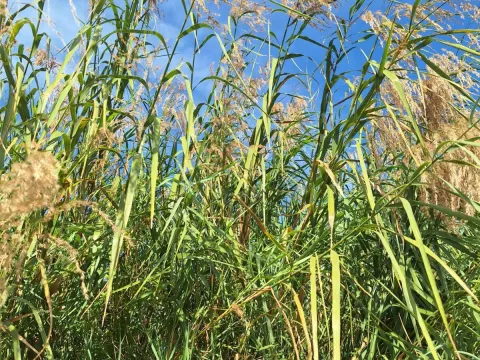
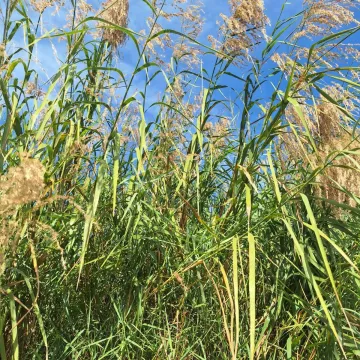
Mauritian reed (Phragmites mauritianus) is a tall, perennial grass species belonging to the Poaceae family. This robust hydrophytic plant is widely recognized for its ability to form dense, extensive stands in aquatic habitats, floodplains, and wetland environments, where it plays a critical ecological role.
Originating from Tropical Africa and the surrounding islands, this species is well-adapted to warm, tropical climates. Its distribution range is strictly associated with regions that offer consistent water availability and nutrient-rich substrate, which are essential for supporting its vigorous growth throughout the year.
From a botanical perspective, the plant is characterized by a vigorous rhizomatous root system, which allows it to thrive in waterlogged conditions and colonize new areas efficiently. The culms (stems) are tall, reaching heights of 2 to 5 meters, displaying a rigid structure. The leaves are linear and tough, while the inflorescence is a large, feathery panicle that can produce significant amounts of biological material.
Agronomic requirements for this crop focus primarily on water management and soil enrichment. It thrives best in silty or alluvial soils with high organic matter content. Effective cultivation practices involve maintaining optimal water levels and implementing sustainable harvesting cycles, which prevent the build-up of dead biomass and encourage the regrowth of healthy, high-quality stalks.
The economic value of Phragmites mauritianus is significant in various sectors:
- Construction industry: Production of high-quality thatching materials and insulation boards.
- Bioenergy sector: Use as a reliable source of biomass for pellet fuel production.
- Industrial chemistry: Potential source of cellulose and paper pulp.
- Environmental management: Natural filtration systems to treat wastewater and manage wetland ecosystems.
Typical plant health issues involve fungal pathogens that affect the stems during prolonged periods of stagnant water and high humidity. Common pests include stem borers and various sucking insects that can impact the quality of the stalks. Management strategies involve regular field monitoring, proper spacing to ensure airflow, and timely harvesting to mitigate the impact of disease outbreaks.
Photo gallery