Phtheirospermum japonicum
Phtheirospermum japonicum
Description
Phtheirospermum japonicum is a fascinating herbaceous plant belonging to the Orobanchaceae family. Unlike fully parasitic species, this plant is a facultative hemiparasite. While it performs photosynthesis to produce its own energy, it also develops specialized root structures called haustoria to derive water and essential nutrients from the roots of host plants, which significantly enhances its growth and reproductive success.
The native range of this species is spread across East Asia, predominantly in Japan, China, and the Korean Peninsula. It naturally thrives in diverse environments, including sunny meadows, forest edges, and open hillsides. The plant prefers regions with temperate climatic conditions where it can interact with a variety of host species to maintain its metabolic balance throughout the growing season.
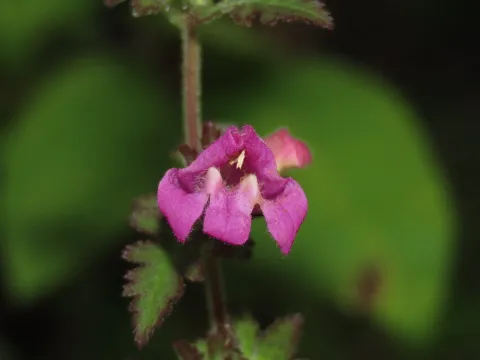
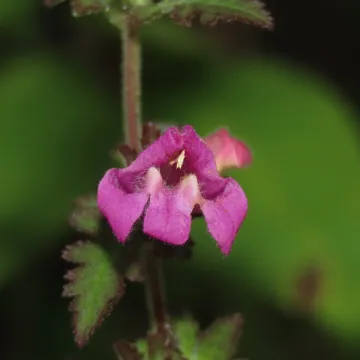
Botanically, Phtheirospermum japonicum is characterized by its glandular, hairy stems and opposite, pinnately divided leaves. The flowers are zygomorphic, typically displaying vibrant pink to purple hues, which make the plant visually distinct. Its root system is particularly specialized, featuring the necessary adaptations to penetrate and tap into the vascular systems of suitable host plants without necessarily killing them.
Cultivation requirements for this species are specific due to its hemiparasitic nature. It requires well-drained, nutrient-rich soil and adequate exposure to sunlight. When managed for research or controlled settings, the presence of suitable host plants is essential for the healthy development of the specimens. Irrigation should be monitored to prevent soil waterlogging, which could negatively impact the delicate root-haustoria interactions.
The primary utility of this plant lies in its application as a model organism in plant developmental biology and genetic research. By studying the complex mechanisms of its parasitic interaction with host species, researchers gain critical insights into the evolution of plant parasitism. These findings are foundational for agricultural science, especially in developing methods to mitigate the impact of detrimental parasitic weeds on major commercial crops.
- Facultative hemiparasitic life strategy.
- Specialized haustoria development.
- Used as a model system in evolutionary botany.
Photo gallery