Phthirusa exilis
Phthirusa exilis
Description
Phthirusa exilis is a perennial hemiparasitic plant belonging to the Loranthaceae family. Unlike traditional crops, this species is an epiphyte that attaches itself to the branches of host trees, utilizing specialized root structures known as haustoria to extract water and mineral nutrients from the host's vascular system.
The plant is native to the tropical regions of Central and South America. It thrives in humid forest environments, where it has evolved to colonize a wide variety of tree species, taking advantage of the stable climate and abundant host density to spread its seeds, typically through avian vectors.
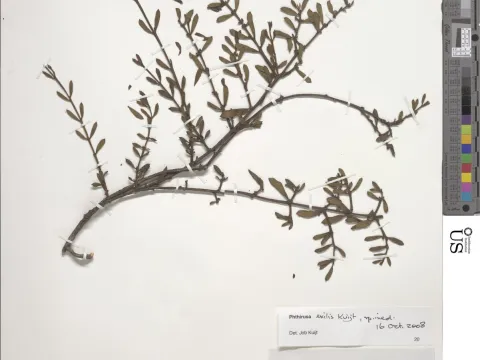
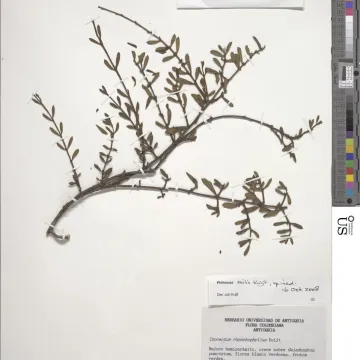
Botanically, Phthirusa exilis is characterized by its branching stems and coriaceous leaves that retain the ability to perform photosynthesis. While it relies on the host for water and minerals, it produces its own carbohydrates, which defines its ecological role as a hemiparasite rather than a total parasite.
From an agronomic perspective, this plant is generally viewed as a pest or a nuisance rather than a crop. In orchards and coffee or cocoa plantations within its range, its presence can lead to branch dieback, reduced vigor of the host tree, and ultimately a decline in overall agricultural yield if left unmanaged.
Control strategies for this species involve proactive agricultural practices. The primary method of management is the manual removal of infected branches or clusters before the parasite impacts the health of the host tree. There are no specific "pests" of this plant, as it is itself considered an ecological stressor in agricultural management systems.
Photo gallery