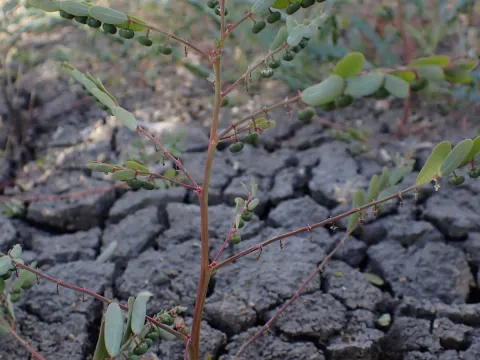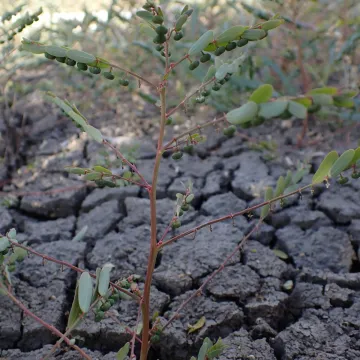

Phyllanthus lacunarius
Phyllanthus lacunarius
Description
Phyllanthus lacunarius is a herbaceous or shrubby species belonging to the Phyllanthaceae family. This plant is known for its remarkable adaptability to wetland habitats, making it an object of interest for agronomists exploring crops capable of thriving in seasonally flooded soils or riparian environments where traditional species might struggle to survive.
The origin of Phyllanthus lacunarius is primarily traced to regions within Australia and specific parts of the tropics. The plant is naturally evolved to endure environmental fluctuations, particularly heavy rainfall and waterlogged conditions, which has shaped its physiological traits to favor rapid growth and robust root development in nutrient-rich, damp soils.
Botanically, the species is characterized by small, alternate leaves arranged along delicate branches, forming a dense and resilient canopy. The plant exhibits a unique reproductive morphology typical of the Phyllanthus genus, with inconspicuous flowers appearing in leaf axils. Its root system is exceptionally efficient at nutrient uptake in anaerobic soil conditions, which is its primary competitive advantage.
Regarding agrotechnical requirements, the crop demands high moisture levels and a well-drained but consistently damp substrate. In a controlled agricultural setting, it is essential to mimic its native conditions by providing enriched soil and ensuring protection against extreme cold. Light exposure should be bright but filtered to prevent leaf scorching, especially in younger plant stages.
The industrial and economic use of Phyllanthus lacunarius is primarily linked to the pharmaceutical sector, as many plants in the Phyllanthus genus are rich in bioactive phytochemicals, including flavonoids and tannins. It holds potential for sustainable harvesting in specific botanical projects focused on natural medicine. Consider these essential points for farm management:
- Maintenance of consistent soil moisture levels is critical.
- Regular application of balanced nutrients to support growth.
- Implementation of integrated pest management to control aphids.
- Avoidance of water stagnation to prevent fungal infections.
- Optimal site selection based on heat and humidity requirements.
Pest management for this species is focused on controlling whiteflies and spider mites, which can become problematic in high-humidity environments. Diseases such as root rot and leaf spot are common if aeration is insufficient. Implementing crop rotation and maintaining spacing between plants are the most effective strategies to prevent the rapid spread of infections within a cultivation field.
Photo gallery