Phyllanthus virgatus
Phyllanthus virgatus
Description
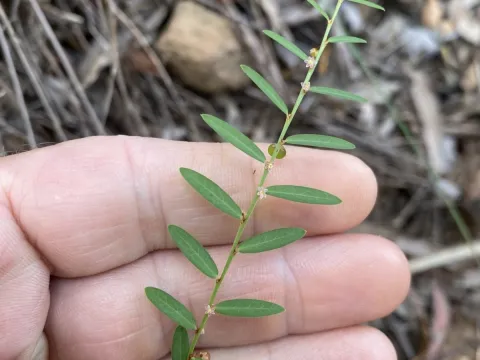
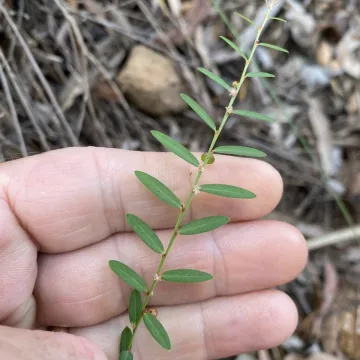
Phyllanthus virgatus is an herbaceous species belonging to the family Phyllanthaceae. Known for its slender, wand-like appearance, this plant typically exhibits an upright growth habit, reaching moderate heights while maintaining a complex branching structure that supports its dense foliage.
The native distribution of this species spans across the tropical and subtropical regions of Asia, Africa, and Australia. In its natural habitat, it thrives in open environments, including forest edges and cultivated lands. Due to its high adaptability, it has successfully established itself in various ecosystems, often displaying weed-like resilience in warm, humid climates.
Botanically, the plant is characterized by its alternate, elliptical leaves and small, axillary flowers that are often overlooked due to their size. The plant's structure allows it to maximize light absorption in competitive environments. Its root system is relatively shallow, making it sensitive to soil surface conditions but capable of quick establishment after rains.
Regarding cultivation requirements, Phyllanthus virgatus prefers well-drained, fertile soils with plenty of exposure to sunlight. It is highly sensitive to frost and cold stress, necessitating cultivation in controlled greenhouse conditions if moved to temperate zones. Agronomic management involves consistent irrigation and preventing weed competition during the early growth phases, as the plant does not tolerate heavy shade.
The economic value of this plant is primarily rooted in its biochemical properties. It is traditionally utilized in various medical practices for its concentrated phytochemical profile, including flavonoids and tannins. Research continues into its agricultural viability as a specialized crop for the botanical supplement industry, despite the ongoing challenges regarding pest management, specifically against aphids and spider mites.
- Requirement for full to partial sunlight exposure
- Preference for well-aerated, loamy soil textures
- susceptibility to fungal root infections in waterlogged conditions
Photo gallery