Pink mountain-heather
Phyllodoce empetriformis
Description
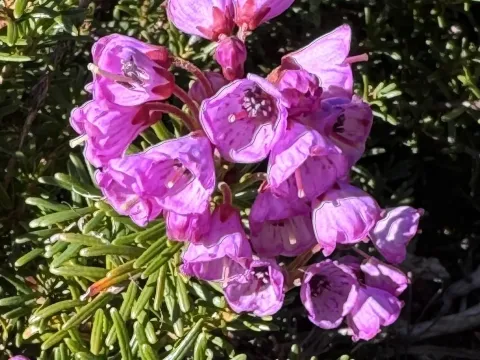
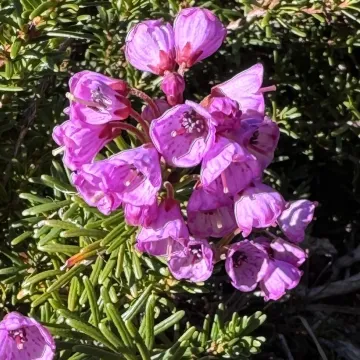
Pink mountain-heather (Phyllodoce empetriformis) is a low-growing evergreen shrub belonging to the Ericaceae family. Known for its mat-forming growth habit and beautiful bell-shaped pink to purple flowers, this plant is a staple for gardeners specializing in alpine and rock garden environments.
The species originates from the subalpine and alpine zones of western North America. It is naturally adapted to cool, moist environments and is frequently found growing in rocky slopes, meadows, and along the edges of mountain streams. This alpine heritage dictates its specific environmental needs when cultivated in home or botanical gardens.
Botanically, the plant features needle-like, dark green leaves that remain persistent throughout the year. The stems are branched and woody, creating a dense, spreading habit that rarely exceeds 30 centimeters in height. The flowers are produced in terminal clusters, providing a significant aesthetic boost to the garden landscape during the early-to-mid summer blooming period.
Cultivation success depends on replicating the plant's natural habitat. It requires acidic, well-draining soil rich in organic matter. Growers should provide a cool root zone, often achieved through organic mulching, and maintain consistent soil moisture. Because the plant is native to high-altitude regions, it struggles in areas characterized by hot, humid summers.
In terms of agricultural and horticultural use, Phyllodoce empetriformis is highly valued for ornamental purposes. It is typically used as a ground cover in specialized beds or as a specimen in rock gardens. The plant is generally hardy, though it may suffer from root rot if drainage is insufficient. Keeping the plant in its optimal soil conditions is the best way to prevent pest issues and ensure longevity.
Photo gallery