Phyllospadix scouleri
Phyllospadix scouleri
Description
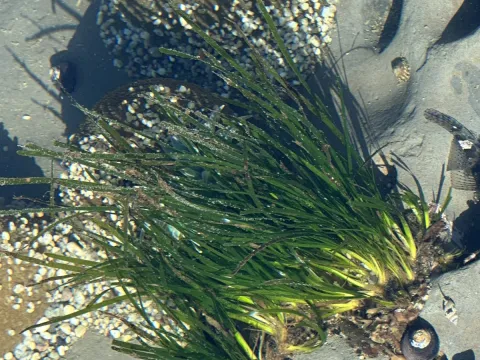
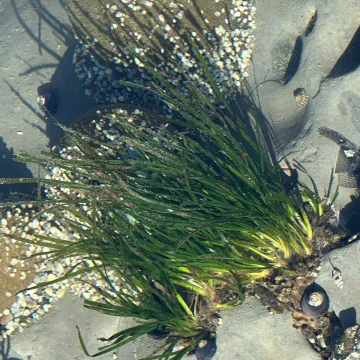
Phyllospadix scouleri, commonly known as Scouler's surfgrass, is a perennial marine flowering plant belonging to the Zosteraceae family. Unlike true seaweeds, this plant is a vascular marine organism that thrives in the high-energy intertidal and subtidal zones of the northern Pacific Ocean.
The geographic range of this species extends along the rocky shores of North America, from Alaska to Baja California. It is highly specialized for habitats with constant water motion, utilizing its robust, creeping rhizomes to firmly anchor onto rocky substrates where it creates dense, lawn-like carpets.
Botanically, it is distinguished by long, bright green, ribbon-like leaves that are exceptionally resilient to physical abrasion from sand and wave action. These leaves can grow up to a meter or more in length, facilitating efficient photosynthesis in the turbulent and light-variable waters of the surf zone.
Environmental requirements for the species are strict, as it requires clear, oxygenated, and nutrient-balanced seawater. In terms of conservation and restoration, managing Phyllospadix populations involves protecting water quality and preventing mechanical disturbances that could disrupt the delicate balance of the rocky reef ecosystem.
Economically and ecologically, it serves as a critical nursery habitat for various marine organisms, including shellfish and fish larvae. While not a commercial crop in the traditional agricultural sense, there is growing interest in its use for coastal engineering projects, water quality bio-remediation, and potential biomass production in integrated multi-trophic aquaculture systems.
Photo gallery