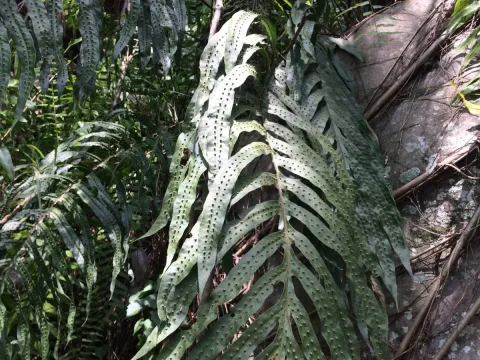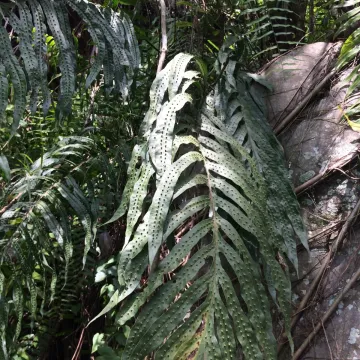
Phymatosorus membranifolius
Phymatosorus membranifolius
Description
Phymatosorus membranifolius is a perennial fern belonging to the Polypodiaceae family. In commercial horticulture, this plant is classified as an ornamental foliage crop, widely appreciated for its delicate, translucent fronds and unique architectural growth form, making it a valuable addition to indoor collections and botanical exhibitions.
Native to the humid tropical forests of Southeast Asia and parts of the Pacific, this species is naturally adapted to sheltered, shaded environments. Its cultivation is primarily localized in controlled greenhouse settings and specialized nurseries, where the stable microclimatic conditions necessary for its development can be meticulously maintained throughout the year.
Botanically, the plant is characterized by its rhizomatous growth habit, with creeping rhizomes covered in scales that facilitate its epiphytic or semi-terrestrial nature. The fronds are distinctly thin and membranous, displaying an intricate pinnate structure. This physiological adaptation allows the plant to thrive in low-light, high-humidity habitats under the dense forest canopy.
Agronomic requirements emphasize the necessity for a well-draining, highly porous substrate, often composed of orchid bark, perlite, and peat. The plant requires a consistent temperature regime between 18°C and 26°C and a high atmospheric humidity level. Irrigation must be managed carefully to ensure the substrate remains moist but never waterlogged, as excessive saturation leads to root rot.
The primary economic use is in the decorative horticulture industry, including luxury interior landscaping and exotic plant retail. Common pests include spider mites and scale insects, which flourish in dry conditions. Disease management focuses on preventing fungal pathogens through adequate air circulation, stable humidity, and strict sanitation of the growing environment.
- Use of high-quality, chlorine-free water is essential.
- Requires filtered light to prevent leaf tissue damage.
- Regular fertilization with specialized fern nutrients is required for optimal health.
Photo gallery