Wart Fern
Phymatosorus scolopendria
Description
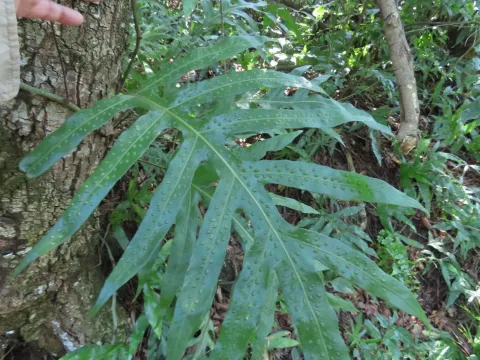
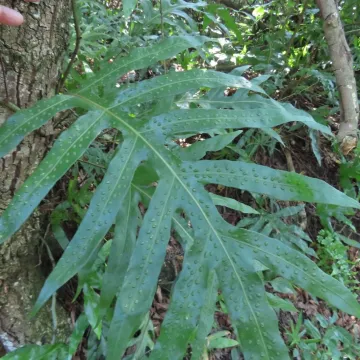
The Wart Fern (Phymatosorus scolopendria) is a robust perennial fern belonging to the Polypodiaceae family. Often referred to by its synonym Microsorum scolopendria, this species is noted for its distinctive creeping, scaly rhizomes and deeply lobed, leathery fronds that can grow significantly in length, depending on the environment and growing conditions.
Originating from the tropical regions of Africa, Asia, Australia, and the Pacific Islands, this fern typically grows as an epiphyte on tree trunks or as a lithophyte on rocks. It thrives in humid, shaded forest environments, which dictates its specific requirements when grown in a controlled agricultural or domestic setting. It is widely recognized for its high adaptability to varying tropical climates.
Botanically, the plant is characterized by its glossy, dark green fronds that are often divided into several wide segments. The reproductive structures, known as sori, are small, round, and visible on the underside of the fertile fronds. The rhizome system acts as a storage organ, allowing the plant to survive in environments where moisture levels might fluctuate, though it remains a moisture-loving species.
For successful cultivation, the plant requires a well-draining, nutrient-rich substrate, such as a mix of coco coir, bark, and perlite. It demands consistent high humidity and bright, indirect light to maintain its vibrant color and growth rate. It is sensitive to extreme cold and must be protected from temperatures dropping below 15°C. Proper air circulation is essential to prevent fungal infections.
The primary use of the Wart Fern is in ornamental horticulture, where it is used as a decorative houseplant or a ground cover in tropical gardens. In some cultures, it has been used in traditional medicine, although its modern value is predominantly aesthetic. When managed in production, it is susceptible to typical greenhouse pests such as scale insects and spider mites, requiring diligent monitoring and integrated pest management practices.
Photo gallery