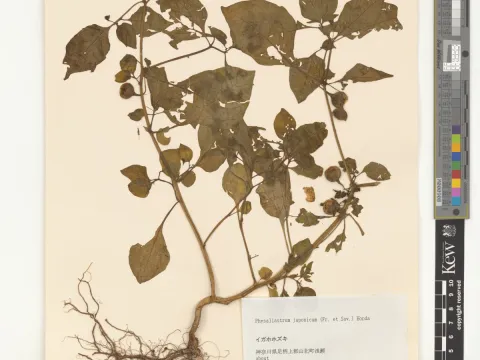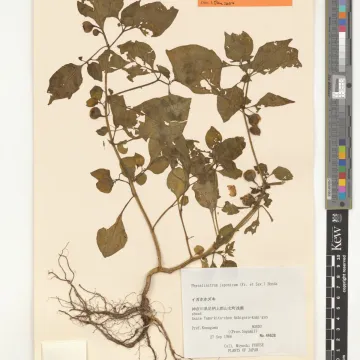

Physaliastrum japonicum
Physaliastrum japonicum
Description
Physaliastrum japonicum is a perennial herbaceous plant belonging to the Solanaceae family. While it is not a primary food crop on a global scale, it serves as a subject of interest for botanists and specialized plant growers due to its distinct morphological features and its evolutionary relationship with the more common Physalis genus.
The plant originates from East Asia, with a primary distribution range across Japan and parts of China. It typically grows in moist, temperate forest environments where there is rich leaf mold and protection from intense direct sunlight. Its natural habitat dictates the specific requirements for successful cultivation in garden or experimental settings.
Botanically, Physaliastrum japonicum displays the classic vegetative structure of the nightshade family, including simple, alternate leaves and distinctive bell-shaped flowers. The most notable trait is the fruiting stage, where the calyx enlarges to encapsulate the berry, providing protection during development. This process reflects the plant's adaptation to its native woodland ecosystem.
The agricultural requirements for this crop focus on soil fertility and moisture management. It thrives in well-drained, loamy soils rich in organic matter with a slightly acidic to neutral pH. Gardeners must ensure consistent soil moisture and protect the plant from high-intensity sunlight, which can cause leaf scorch. Regular fertilization is recommended during the active growing season to support biomass production.
Economically, the plant is primarily utilized in ornamental horticulture and botanical research. Its secondary metabolites make it an object of study for phytochemical applications within the pharmaceutical industry. Like many Solanaceous crops, it is susceptible to pests such as aphids and diseases like blight, necessitating a proactive approach to integrated pest management.
- Soil preparation with high organic matter content.
- Partial shade requirements for optimal growth.
- Consistent irrigation to maintain soil moisture.
- Integrated pest management for nightshade-specific pathogens.
Photo gallery