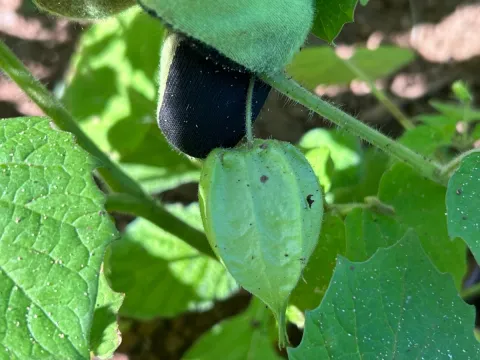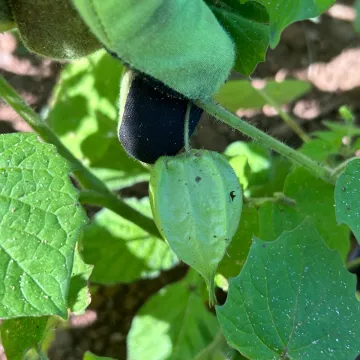

Giant groundcherry
Physalis maxima
Description
Giant groundcherry (Physalis maxima) is a significant agricultural crop belonging to the Solanaceae family. Like other members of this family, it is known for its distinct botanical structure, where the fruit develops inside a papery, inflated calyx that serves as a protective husk throughout the ripening process.
Originating from the tropical and subtropical regions of the Americas, this plant thrives in warm climates with long growing seasons. Its current distribution is centered in regions where high temperatures and ample sunlight ensure that the fruits reach their peak flavor and nutritional density during the summer months.
From a botanical perspective, the plant exhibits strong vegetative growth, often reaching significant heights. It features alternate leaves and distinct flowers that transition into the characteristic husk-covered berries. The root system is extensive, requiring well-structured soils that prevent water stagnation while retaining necessary nutrients.
Agronomic requirements for Physalis maxima include a well-drained, fertile soil profile with a balanced pH level. Proper field management involves routine irrigation, consistent weeding to reduce competition for nutrients, and strategic fertilization. In cooler temperate zones, farmers typically start seeds in greenhouses to extend the growing window.
The culinary and commercial use of the fruit is versatile, ranging from fresh consumption to processing into preserves and culinary additives. Growers must remain vigilant against potential agricultural threats, which include:
- Fungal diseases such as late blight and leaf spots.
- Insect pests, particularly aphids and tomato fruitworms.
- Bacterial wilt that can impact plant vigor in humid conditions.
- Soil-borne pathogens resulting from poor crop rotation practices.
Photo gallery