Physcomitrella patens
Physcomitrella patens
Description
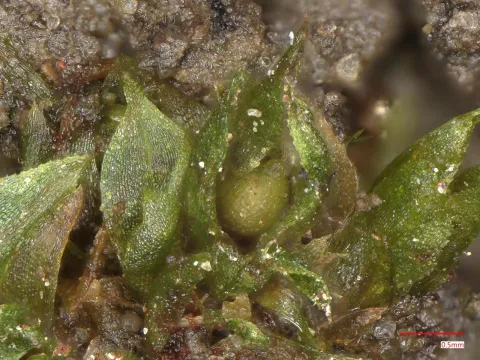
Physcomitrella patens is a species of moss belonging to the Funariaceae family. While not a conventional crop in agricultural terms, it stands as one of the most significant model organisms in plant biology, revolutionizing our understanding of plant evolution, genetic regulation, and stress response mechanisms.
The plant originates from temperate regions across the Northern Hemisphere. It thrives in damp environments, often colonizing disturbed soils or riverbanks. Its natural ability to withstand periods of desiccation provides a genetic roadmap for creating drought-tolerant crop varieties in the future, which is a major focus of modern agricultural research.
The botanical structure of this moss is unique, primarily due to its haploid gametophyte stage, which simplifies genetic analysis. Unlike most plants, Physcomitrella patens exhibits a very high frequency of homologous recombination. This allows researchers to perform precise gene knockouts, making it an ideal candidate for testing new CRISPR/Cas9 technologies and advanced synthetic biology approaches.
Regarding cultivation, the moss is typically grown in highly controlled environments using specialized mineral media. Because the plant is small and grows relatively fast, it can be cultivated in bioreactors, which is a key advantage for industrial production. Maintaining specific light intensity, temperature, and atmospheric moisture levels is critical for successful biomass accumulation.
The primary economic value of this species lies in its role as a platform for molecular farming. It is utilized to express complex pharmaceutical proteins that require post-translational modifications, which the moss performs in a manner safer and more efficient than bacterial systems. This turns the simple moss into a powerhouse for the next generation of biopharmaceuticals.
- High efficiency of targeted genome editing.
- Fast vegetative growth and regeneration potential.
- Well-sequenced and annotated genome.
- Suitability for large-scale liquid bioreactor cultivation.
- Valuable source for identifying stress-response genes.
Photo gallery