
Brazilian rosewood
Physocalymma scaberrimum
Description
Brazilian rosewood, scientifically known as Physocalymma scaberrimum, is a distinctive tree species belonging to the Lythraceae family. It stands as a unique botanical entity, often recognized for the exceptional quality of its timber, which is highly sought after in international markets for luxury furniture and artisanal craftsmanship.
The origin of this species is traced to the tropical regions of Brazil. It typically flourishes in the cerrado biome, characterized by high temperatures and distinct dry and wet seasons. This adaptation to seasonal climate fluctuations is a critical factor in the tree's growth rate and the resulting density and grain pattern of its high-value heartwood.
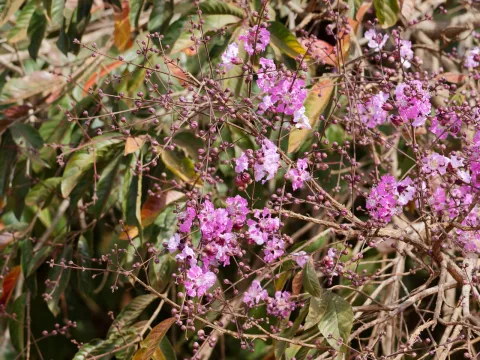
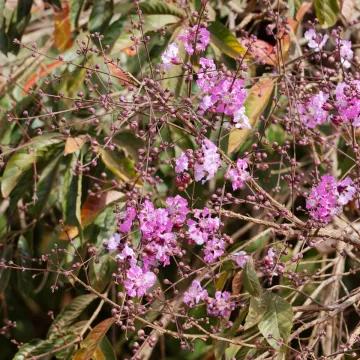
Botanically, it is a deciduous tree that can grow up to 20 meters tall. The tree is characterized by its notably rough bark, from which its Latin specific epithet scaberrimum is derived. Its floral display, consisting of vivid pink to purple blossoms, makes it visually striking, while its root system is well-developed to penetrate deep, nutrient-poor tropical soils.
Regarding agrotechnical requirements, the plant demands well-drained soil and high levels of sunlight. In cultivation, it is essential to monitor soil moisture levels, as waterlogged conditions can lead to root rot. Successful propagation often begins in controlled nursery environments where temperature and humidity are precisely managed to ensure the viability of young seedlings before field transplantation.
The primary economic application of this tree is the production of premium lumber. The wood is prized for its hardness, color, and durability, making it ideal for musical instruments and fine cabinetry. Potential pests include various wood-boring insects, and common diseases often involve fungal infections that arise when the tree is stressed by environmental imbalances or improper planting sites.
Photo gallery