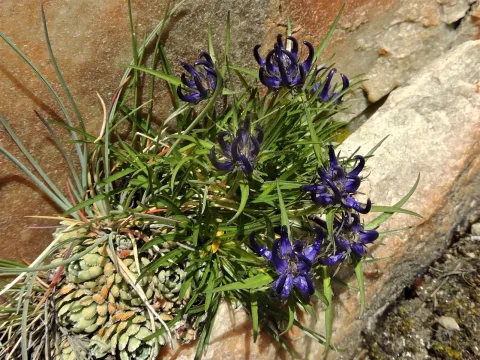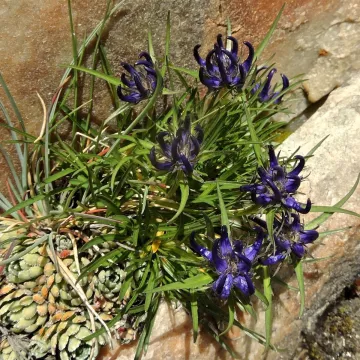
Dwarf Rampion
Phyteuma humile
Description
Dwarf Rampion (Phyteuma humile) is a perennial herbaceous plant belonging to the Campanulaceae family. While not an agricultural commodity in the traditional food sense, it is a significant horticultural subject used in specialized gardening and alpine plant cultivation. It is valued for its hardiness and unique aesthetic appeal in mountainous landscape designs.
The plant originates from the high-altitude mountain ranges of Europe, including the Alps and the Pyrenees. It is native to rocky slopes, limestone debris, and alpine meadows. Its distribution is restricted to regions with cold climates and short growing seasons, which has naturally selected for its extreme resilience and specialized growth cycle.
Botanically, it features a basal rosette of narrow, linear leaves and a short flower stalk. The plant produces dense, head-like inflorescences characterized by tubular, deep blue or violet flowers that are typical of the Phyteuma genus. The root system is deep and taproot-like, which allows the plant to anchor itself firmly in harsh, rocky substrates.
Cultivation requirements focus on mimicking high-altitude environments. The ideal soil is a porous, mineral-rich mixture that provides exceptional drainage. Overwatering, particularly during the dormant season, is the most common cause of failure in cultivation. It thrives in full sun but requires good air circulation to prevent overheating and fungal issues.
- Requires well-drained, gritty soil.
- Avoids waterlogged conditions to prevent root rot.
- Best suited for rock gardens and troughs.
- Tolerates cold climates but needs protection from excessive winter humidity.
In terms of usage, Dwarf Rampion is primarily an ornamental crop used in rock gardens, scree beds, and specialized rockeries. While it is generally resistant to pests and diseases, gardeners should monitor for root rot under poor drainage conditions and protect against mollusks like slugs that may graze on young shoots in damp spring weather.
Photo gallery