Dark rampion
Phyteuma nigrum
Description
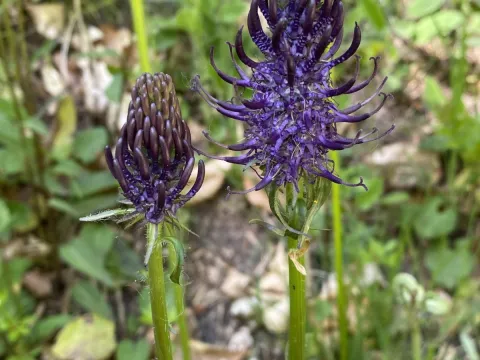
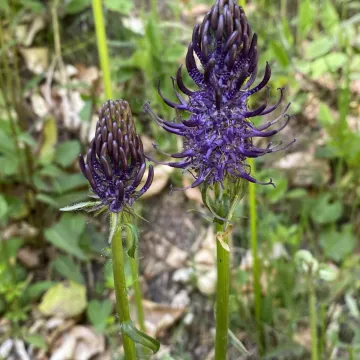
Dark rampion (Phyteuma nigrum) is a perennial herbaceous plant belonging to the Campanulaceae (bellflower) family. It is widely recognized for its striking dark purple, near-black inflorescences that provide a unique aesthetic appeal. While not a traditional food crop, it serves as a significant ornamental plant in temperate horticultural landscapes.
The plant originates from Central European meadows and woodland edges. It thrives in moderate climates, exhibiting a preference for locations where moisture levels are consistent throughout the growing season. As a resilient species, it has been introduced to various regions where it adapts well to semi-shaded garden environments and nutrient-rich soil types.
Botanically, Phyteuma nigrum features a basal rosette of lanceolate leaves and a distinct vertical flowering stem. The flowers are clustered into a dense, spike-like head. This structure is highly specialized for insect pollination, particularly by bees and butterflies, which are attracted to the deep, dark pigmentation of the blossoms during late spring and early summer.
Successful cultivation relies on specific agricultural practices:
- Site selection: Prefers dappled sunlight or partial shade.
- Soil preparation: Needs well-draining, humus-rich, and slightly acidic or neutral soil.
- Watering: Requires regular irrigation to prevent the root system from drying out.
- Maintenance: Mulching around the base helps regulate soil temperature and moisture.
- Fertilization: Balanced fertilizers should be applied sparingly in the early spring to support foliage growth.
The primary use of the dark rampion is decorative, often featured in borders, rock gardens, and naturalistic landscape designs. Regarding plant health, the species is occasionally targeted by slugs and snails, which feed on the tender foliage. In terms of diseases, powdery mildew can occur if planting density is too high or if air circulation is insufficient, necessitating careful spacing and proper site management.
Photo gallery