Ombu
Phytolacca dioica
Description
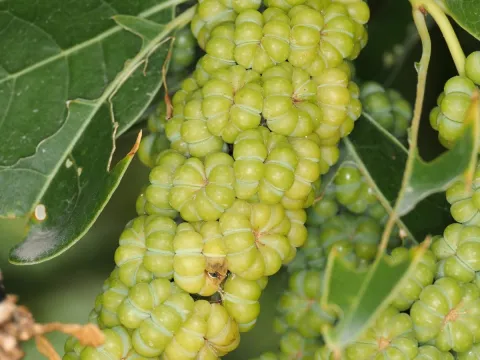
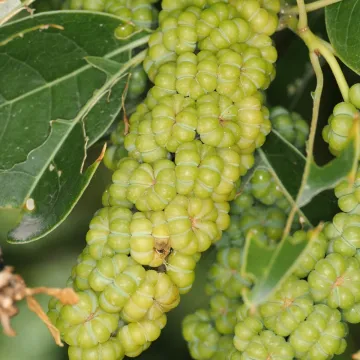
Ombu (Latin Phytolacca dioica) is a massive, long-lived, evergreen plant belonging to the Phytolaccaceae family. It is often described as a tree, although botanically it is a giant woody herb. Its distinctively swollen, thick trunk and soft wood are specialized adaptations that store water, allowing the plant to thrive in the open, often dry environments of the South American pampas.
Native to the subtropical regions of South America, specifically Argentina, Uruguay, and southern Brazil, the plant is synonymous with the vast grasslands of its origin. It is cultivated in various subtropical and Mediterranean climates worldwide, primarily for ornamental purposes and as a shade provider in large open areas where other trees might struggle to establish.
Botanically, Phytolacca dioica exhibits a dioecious habit, meaning male and female flowers are produced on separate individuals. Its roots are exceptionally strong and can extend far horizontally, often creating large mounds above the ground. The leaves are large, simple, and glossy, contributing to a dense canopy that provides significant relief from intense sunlight in its native habitat.
The agricultural requirements for Ombu include deep, fertile, and well-drained soils. While it is highly resistant to drought once established, young plants require consistent watering to ensure proper root development. The species is highly sensitive to frost, which limits its commercial cultivation to frost-free regions. Propagation is typically achieved through seeds or stem cuttings, requiring minimal intervention once mature.
Common uses for this plant include:
- Landscape restoration and urban forestry in warm climates.
- Providing shade for livestock in pasture settings.
- Ornamental value in botanical gardens and large estates.
- Traditional ethnobotanical and medicinal applications.
Regarding pest and disease management, Ombu is notably hardy. Due to the presence of secondary metabolites in its tissues, it suffers from very few insect attacks. The primary concerns for growers involve preventing root rot caused by poor soil drainage and ensuring appropriate spacing to accommodate its wide, expansive root system, which can potentially damage nearby infrastructure if not properly managed.
Photo gallery