African soapberry
Phytolacca dodecandra
Description
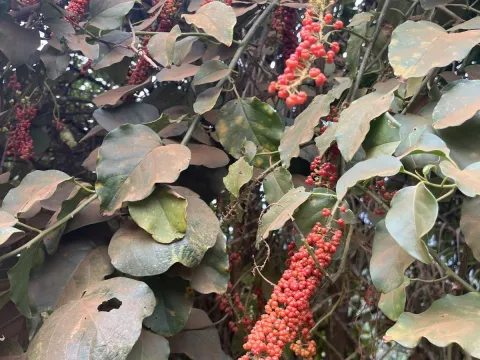
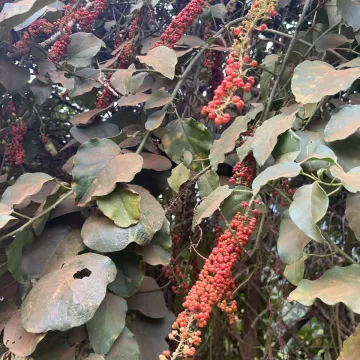
African soapberry (Phytolacca dodecandra) is a perennial shrub or climbing plant belonging to the Phytolaccaceae family. It is widely recognized for its high concentration of saponins, which are compounds that act as natural detergents, earning the plant its common name and significant interest in various agricultural and industrial applications.
Native to tropical Africa, this plant thrives in regions across the continent. While it is often found growing wild, it has been increasingly integrated into small-scale agricultural systems. Its ability to adapt to diverse environments has made it a subject of study for sustainable farming in developing tropical regions.
The plant features woody stems, large alternate leaves, and distinct racemes of small flowers. The fruits, which are the most valuable part for saponin extraction, are berries that turn bright red or purple upon maturity. The plant's root system is robust, allowing it to survive in varied soil conditions, although it performs best in well-drained, nutrient-rich soils.
Cultivation of Phytolacca dodecandra requires careful consideration of climate and soil management. It is best suited to tropical climates with distinct wet and dry seasons. Agricultural practices involve planting in rows with sufficient spacing to encourage light penetration and air circulation. Proper weed management is critical during the establishment phase, as the young plants are susceptible to competition from faster-growing vegetation.
The economic value of this crop is primarily driven by its use in producing biological molluscicides, which help control the snails that transmit schistosomiasis. Furthermore, its natural surfactant properties are utilized in the manufacturing of organic cleaning agents. Common threats to the crop include leaf-eating insects and, in poorly drained areas, fungal infections that impact the root system. Effective management relies on regular field inspections and localized disease control strategies.
Photo gallery