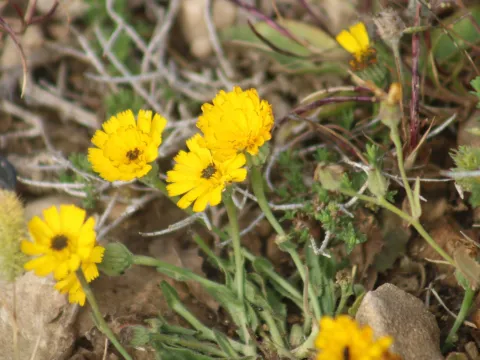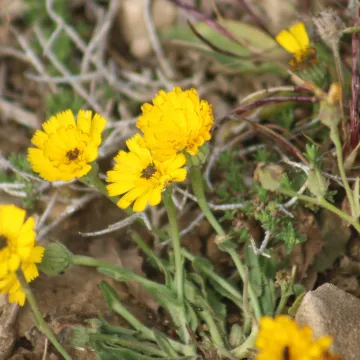
Amalek ox-tongue
Picris amalecitana
Description
Amalek ox-tongue (Picris amalecitana) is a herbaceous plant belonging to the Asteraceae family. While not traditionally grown as a commercial crop, it is a significant species in the Mediterranean botanical landscape, known for its extreme resilience in arid and semi-arid environments.
The species is primarily native to the Eastern Mediterranean region and parts of the Middle East. It flourishes in habitats characterized by harsh, stony soils and limited rainfall, effectively occupying ecological niches where less specialized plants struggle to establish a foothold.
Botanically, the plant is recognized by its rosette of basal leaves covered in coarse, stiff hairs, which help minimize water loss. The plant produces erect, branching stems topped with bright yellow flower heads. These structures are adapted to maximize reproduction during the short growing seasons available in its native range.
Regarding its environmental requirements, the plant thrives in full sun and well-drained, porous soils. It is highly drought-tolerant due to its taproot system, which can access moisture far beneath the soil surface. It prefers neutral to alkaline soil conditions and requires minimal supplemental nutrition, making it a low-input species.
Potential agricultural and ecological applications include:
- Supporting local honeybee populations through nectar production.
- Soil stabilization efforts in areas prone to desertification.
- Evaluating its biomass for potential forage use in extreme grazing conditions.
Common biological challenges involve susceptibility to powdery mildew under conditions of high relative humidity and predation by various aphid species. In formal agricultural settings, it is often categorized as a weed, yet its genetic traits concerning drought and heat resistance are currently being reviewed for potential use in developing more robust agricultural crops.
Photo gallery