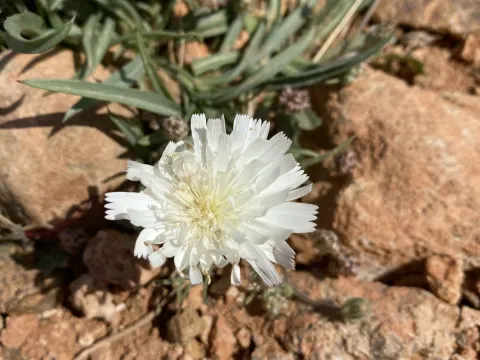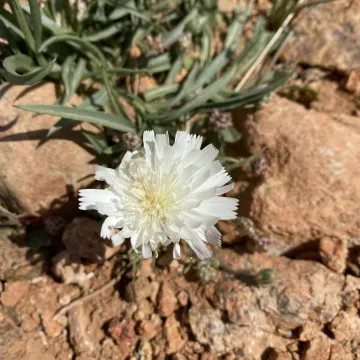
Picris asplenioides
Picris asplenioides
Description
Picris asplenioides is a member of the Asteraceae family, recognized for its resilience and specific environmental adaptations. This plant, while not a mass-market crop, holds scientific and agricultural interest due to its ability to thrive in challenging semi-arid landscapes where traditional crops often fail.
Originating from the Mediterranean and Northern African regions, the plant is well-suited for Mediterranean climates. Its geographical spread is defined by open, sunny habitats and low-nutrient soils, demonstrating its evolutionary strategy as a stress-tolerant survivor in natural grasslands.
The morphology of Picris asplenioides is characterized by deeply lobed leaves that resemble those of the spleenwort fern. It produces yellow capitula during its flowering phase. The plant's structure is optimized for efficient water retention, featuring glandular and non-glandular trichomes on its aerial parts.
Cultivation requires well-drained, porous soils, typically of alkaline or neutral reaction. It is highly intolerant of waterlogging and poor aeration. Agronomic practices should focus on maintaining adequate light exposure, as the species requires significant solar radiation to complete its phenological cycles successfully.
- Excellent drought tolerance.
- Minimal fertilizer requirements.
- Resistance to local soil-borne pathogens.
- Potential for land reclamation.
In terms of agricultural utility, the plant serves as a beneficial component of forage systems in arid zones. Furthermore, it is studied for its chemical compounds which may hold secondary metabolites of interest for medicinal or allelopathic properties, potentially serving as a bio-control agent in sustainable agriculture.
Photo gallery