Picris willkommii
Picris willkommii
Description
Picris willkommii is a distinct plant species belonging to the Asteraceae family. It is recognized by botanists and agronomists for its robust nature and ability to thrive in challenging environmental conditions, making it an interesting subject for studies regarding hardy vegetation in agricultural landscapes.
The origin of this species is firmly rooted in the Mediterranean region, particularly in parts of Spain and Portugal. It naturally colonizes disturbed areas and rocky terrains, demonstrating a high level of resilience against the environmental stressors commonly found in arid and semi-arid climates.
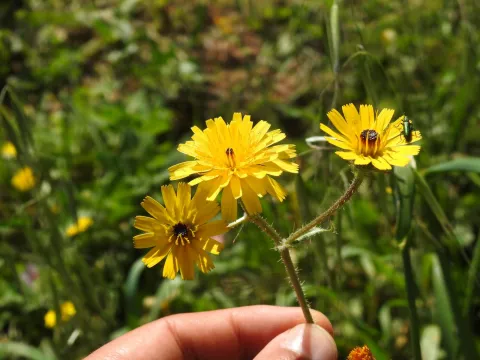
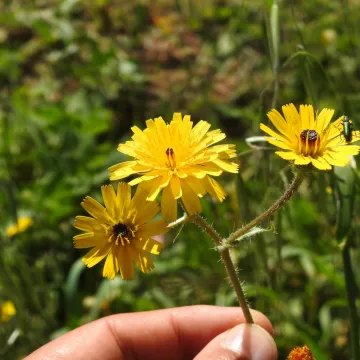
Botanically, the plant is characterized by its hairy foliage, which is an evolutionary adaptation to minimize water loss through transpiration. The bright yellow inflorescences are typical for the genus Picris, providing a visual landmark during the blooming season and playing a vital role in local ecosystem health by attracting various pollinators.
In terms of cultivation, Picris willkommii is not a high-maintenance crop. It thrives in well-drained, lime-rich soils and requires minimal soil amendments. Its deep taproot system allows it to access groundwater in depths that are inaccessible to many shallow-rooted crops, which is an essential trait for sustainable agriculture in dry climates.
Regarding its хозяйственне (economic) usage, this plant is primarily valued for land rehabilitation and as a component of biodiversity-rich forage mixes. It is largely resistant to common pests that plague other Asteraceae crops, reducing the need for chemical intervention in areas where it is managed as part of a vegetation cover program.
- High drought and heat tolerance
- Thrives on nutrient-poor, rocky substrates
- Supports local pollinator populations
- Minimal chemical and fertilizer requirements
Photo gallery