Mongolian pilea
Pilea mongolica
Description
Mongolian pilea (lat. Pilea mongolica) is a perennial herbaceous plant belonging to the Urticaceae family. While many members of the genus Pilea are popular ornamental houseplants, this particular species is a distinct wild plant that exhibits unique biological properties, drawing interest from botanical researchers and those studying the biodiversity of the East Asian region.
The plant originates from the regions of East Asia, primarily inhabiting areas in Mongolia and adjacent territories. Its natural range is characterized by a moderate continental climate, where it has evolved to thrive in specific environmental niches. Typically, it is found in shaded, moist habitats such as stream banks, moist forest edges, and sheltered valleys where water availability is consistently high throughout the growing season.
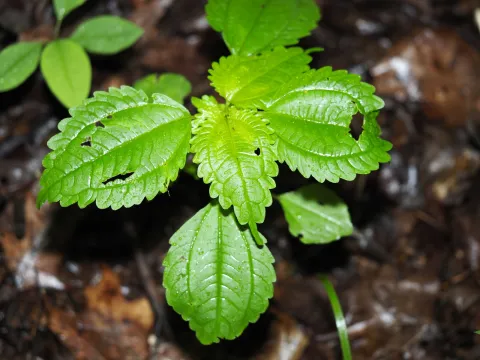
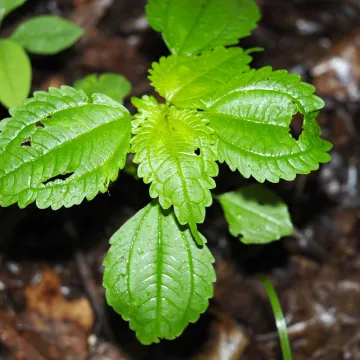
Botanically, the species is defined by its opposite leaves with characteristic venation and small, clustered flowers. Its root system is relatively shallow, allowing it to efficiently draw moisture from the organic-rich topsoil of its habitat. A notable feature of Pilea mongolica is its rapid vegetative spread, which allows the plant to form dense, lush communities when provided with optimal temperature and light conditions.
Agricultural cultivation of this species requires meticulous attention to microclimatic conditions. It prefers highly fertile soils rich in humus with a neutral or slightly acidic pH balance. The most critical factor in its management is protection from intense direct sunlight, which can cause leaf scorch and dehydration. Successful propagation is typically achieved through division or seed germination, with seeds often requiring a period of stratification to break dormancy.
The agricultural and economic significance of Mongolian pilea is currently focused on scientific research, particularly in evaluating its phytochemical profiles for potential pharmaceutical applications. Like many members of the Urticaceae family, it contains specific chemical compounds that may be useful in herbal medicine or industrial extraction. Further studies are ongoing to assess its potential as a specialized fodder crop or for use in ecological restoration projects.
- High humidity requirement
- Strong preference for shaded environments
- Rapid vegetative growth rate
- Sensitivity to direct sunlight exposure
- Optimal performance in humus-rich, well-draining soils
Photo gallery