Pilostyles thurberi
Pilostyles thurberi
Description
Pilostyles thurberi is a remarkable parasitic plant species belonging to the family Apodanthaceae. Unlike traditional crops, this plant is an endoparasite that lacks chlorophyll, roots, and leaves. It spends the vast majority of its life cycle entirely within the internal tissues of its host plant, specifically focusing on various shrub species such as Dalea.
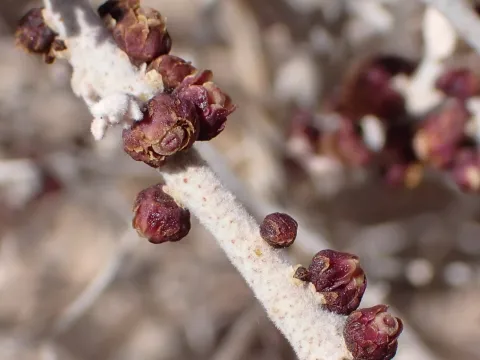
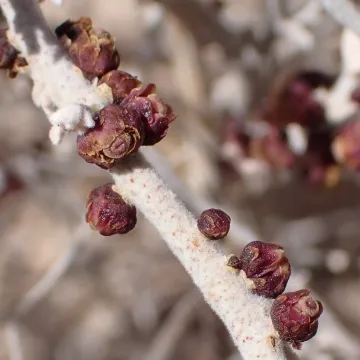
The botanical structure of this plant is highly reduced. Its body consists of a thread-like network of cells that infiltrate the host's stems to extract nutrients and water. The only visible parts of the plant are the small, fleshy flowers that erupt through the bark of the host plant during the reproductive phase. This unique adaptation allows it to survive in arid desert environments where water availability is minimal.
Its natural habitat is restricted to the arid regions of the southwestern United States and northern Mexico. These environments are characterized by extreme heat and periodic drought. Because the plant relies entirely on its host for survival, it is perfectly evolved to endure these harsh conditions without the need for photosynthesis or independent soil interaction.
From an agronomic perspective, Pilostyles thurberi is not an agricultural crop but rather a botanical curiosity and a biological parasite. There are no cultivation requirements or agronomic practices for this species, as it cannot exist independently of its natural host. It is not managed in field conditions, and its presence is generally studied in the context of plant pathology and ecology.
The plant has no economic use in terms of agriculture or industry, as its primary role is within the natural ecosystem of desert shrublands. There are no specific diseases or pests known to affect the Pilostyles thurberi, as its endoparasitic lifestyle protects it from many external environmental stressors. Further research continues to explore its complex evolutionary relationship with its specific host plants.
Photo gallery