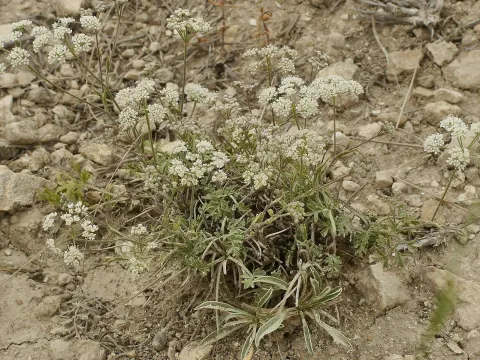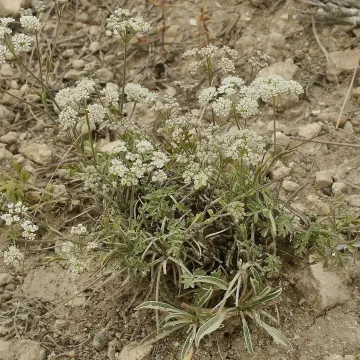

Limestone pimpinella
Pimpinella titanophila
Description
Limestone pimpinella (Pimpinella titanophila) is a perennial herbaceous plant belonging to the Apiaceae (parsley) family. As the name suggests, this species is uniquely adapted to thrive in habitats rich in calcium carbonate, making it a specialized crop for specific pedological conditions.
From a botanical standpoint, the plant features a taproot system and finely divided foliage, which are hallmarks of the Apiaceae family. It produces complex umbel inflorescences typical of the genus. Its biological strategy focuses on resource conservation, allowing it to survive in environments where nutrient availability is restricted but mineral richness is high.
The native range of Pimpinella titanophila is primarily associated with limestone cliffs and stony slopes. In terms of cultivation, it requires a well-drained, porous substrate to thrive. It does not perform well in heavy, clay-rich soils that retain excess moisture, as these conditions are the leading cause of root-related complications.
Regarding agrotechnical requirements, Limestone pimpinella demands high sunlight exposure and minimal competition. It is crucial to maintain an alkaline or neutral pH, as the plant relies on calcium-rich soils to build its cellular structure. Unlike many traditional crops, it requires very little fertilization, as high levels of nitrogen can induce rapid but weak growth, making the plant susceptible to lodging and pests.
The economic utility of the species lies in its secondary metabolites. Research into its chemical profile suggests the presence of essential oils and bioactive compounds that have potential applications in the pharmaceutical and fragrance industries. Furthermore, the species is being evaluated for its resilience in low-input farming systems located on marginal, rocky lands.
- Excellent tolerance to calcareous (limestone) soils.
- Requires high solar radiation.
- Sensitive to waterlogging and root rot.
- Ideal for sustainable cultivation on marginal soils.
Photo gallery