Goat's pimpinella
Pimpinella tragium
Description
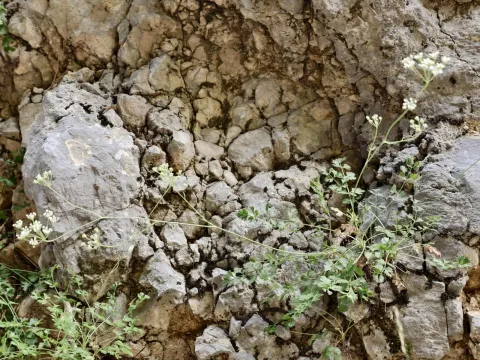
Goat's pimpinella (Latin: Pimpinella tragium) is a perennial herbaceous plant belonging to the Apiaceae family. It is a specialized crop that thrives in environments where soil conditions are often too harsh for conventional farming, making it a subject of interest for sustainable agricultural research in dryland regions.
The plant originates from the Mediterranean basin, the Caucasus, and parts of Western Asia. Its natural habitat includes rocky slopes, screes, and limestone crevices. Due to its evolutionary history as a xerophyte, it possesses a high level of resilience to temperature fluctuations and limited water availability.
Botanically, it is characterized by a sturdy taproot and a rosette of pinnate leaves. The flowering stems produce complex umbels with tiny white to pale flowers, typical of the celery family. The plant's structure is optimized to prevent water loss, featuring small leaf surfaces and a deep root system that anchors it firmly in stony substrates.
Cultivation requirements for this crop focus on providing a low-moisture environment with excellent drainage. Soil pH should ideally be neutral or slightly alkaline. Unlike intensive crops, it does not require heavy fertilization; in fact, overly rich soils can negatively impact the concentration of secondary metabolites, which are the plant's primary commercial value.
Regarding its industrial use, it is primarily harvested for its essential oils and pharmacological compounds used in herbal medicine. It is traditionally valued for its antispasmodic and digestive properties. Managing the crop requires vigilance against common pests and pathogens:
- Aphids, which congregate on the umbels.
- Rust fungi, which occur if there is poor air circulation.
- Larvae of various Umbelliferae moths that feed on seeds and stems.
Photo gallery